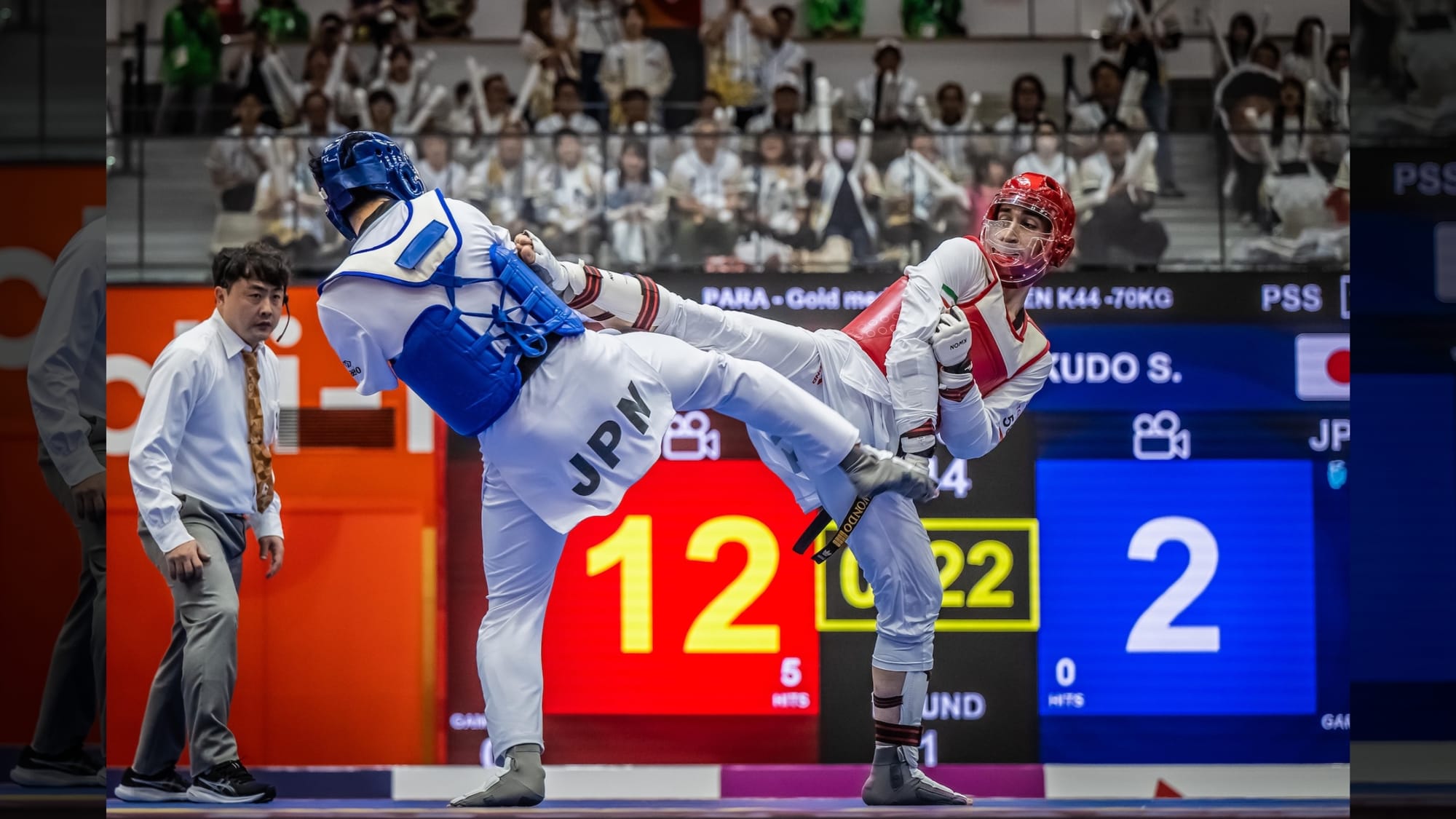
Para taekwondo competition at the Aichi-Nagoya 2026 Asian Para Games ended on 21 October at Nagoya City Mizuho Park Gymnasium. Three K44 classes produced three golds: Iran won the men's -80kg and men's +80kg, Uzbekistan the women's +65kg. The defining moment of the day was not a scoreline: five-time world champion Mahdi Pourrahnamaahmad placed his belt on the mat, kissed it, and left the competition area to a standing ovation.
Three finals: two golds for Iran, one for Uzbekistan
Iran's Alireza Bakht won the men's K44 -80kg title, adding an Asian Para Games gold to the bronze he earned at the Paris 2024 Paralympic Games and the silver he took at the Hangzhou 2022 Asian Para Games. Korea's Jeonghun Joo claimed silver; a bronze medallist at both Tokyo 2020 and Paris 2024, Joo had previously won gold in Hangzhou. Iran's Mahdi Pourrahnamaahmad and Uzbekistan's Otabek Amatov shared bronze.
Uzbekistan's Guljonoy Naimova won the women's K44 +65kg title, another major honour in a career that already includes Paralympic gold at Tokyo 2020, silver at Paris 2024 and Asian Para Games gold at Hangzhou 2022. China's Qi Tang took silver, with Iran's Marzieh Nasrollahi and Uzbekistan's Karomat Kosimova taking bronze.
Iran's Hamed Haghshenas secured gold in the men's K44 +80kg category. A bronze medallist at Paris 2024 and a gold medallist at Hangzhou 2022, he was joined on the podium by Uzbekistan's Umarjon Muydinov with silver. Iraq's Shad Khoshinaw earned bronze after advancing through the repechage, and Uzbekistan's Asadbek Toshtemirov also took bronze.
A belt on the mat: the farewell of a five-time world champion
The heaviest moment of the closing day belonged to Mahdi Pourrahnamaahmad. A five-time world champion and Tokyo 2020 Paralympic silver medallist, he had competed internationally since the first World Para Taekwondo Championships in Baku in 2009. The -80kg bronze in Nagoya was the last bout of his career.
After the final bout he placed the belt that had accompanied him through years of competition on the mat and kissed it. Athletes, officials and fans rose to applaud. World Taekwondo carried the scene in the opening of its official report, describing the result as the end of an era. For a discipline still expanding its class programme, that farewell is itself a piece of history: from the first World Championships in Baku in 2009 to ten K44 classes across three days in Nagoya in 2026, para taekwondo has moved from a niche event to a standing part of the Asian Para Games programme.
"Five-time world champion Mahdi Pourrahnama Ahmad brings his career to a close in Nagoya, drawing a standing ovation after an emotional farewell on the mat."

Three things the final-day results reveal
First, Iran's continuing depth in para taekwondo. Two golds and one bronze on the closing day, with Iranian athletes on the podium in two of the three classes. Iran's record in the discipline is not the product of one or two athletes but of a supply chain that runs from technical officials and coaches to competitors.
Second, the breadth of Uzbekistan's coverage. They collected five medals on the closing day: gold and bronze in women's +65kg, silver and bronze in men's +80kg, and bronze in men's -80kg. Three classes, five podium places. That distribution points to a squad-level pipeline rather than a single standout athlete, and markets with that profile tend to generate steadier equipment demand because new athletes keep entering the system.
Third, Iraq's development path. Shad Khoshinaw reached bronze through the repechage, and World Taekwondo's report notes that his progress reflects his participation in the World Para Taekwondo Training Camp in Muju over the past two years. For emerging squads, structured camps usually shift results more reliably than individual talent, and equipment demand for protectors and training targets tends to follow the camp calendar.
Gear view: the equipment line under K44 rules
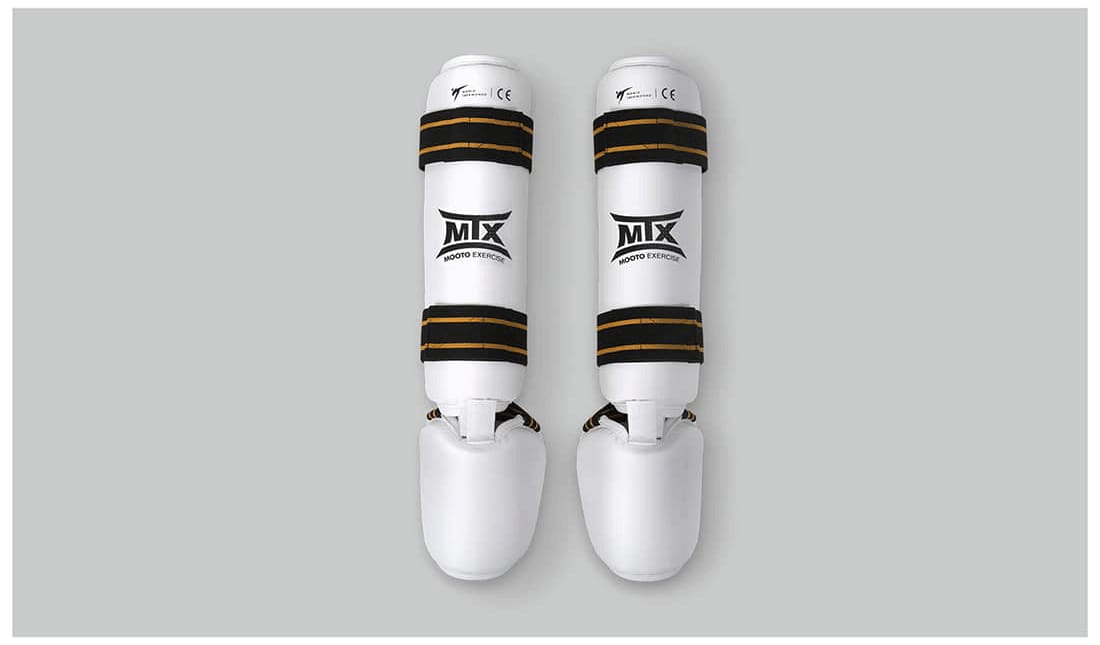
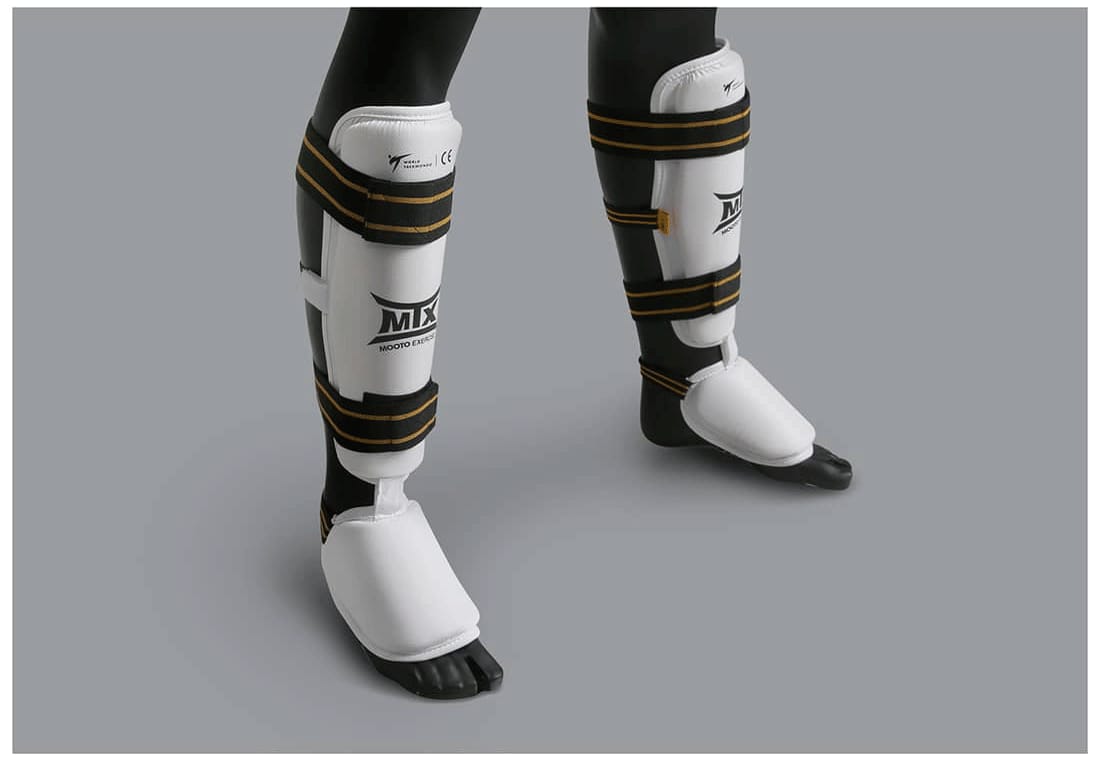
In K44 para kyorugi the trunk is the only valid scoring area and kicks are the only scoring technique. Those two rules put unusual weight on equipment: scoring depends on the sensors and fit of the electronic chest guard, and a guard that shifts during contact can cost a technically clean technique. The chest guard has to follow trunk rotation, and the shin-instep protector has to stay in place through repeated kicking.

For dojangs and event organisers, stocking logic for this group differs slightly from mainstream competitive classes. Size grading has to be finer, because trunk circumference distribution among para athletes is wider than in standard divisions, so a single purchase order usually has to cover more size steps. Reversible red-blue chest guards cut inventory pressure substantially, since one unit covers both sides. Shin-instep protectors and groin guards are high-turnover items and should be allocated by usage frequency rather than headcount.
One consumable category is often overlooked on the training side: targets. Para taekwondo training relies heavily on fixed and moving targets to control distance, and targets wear out faster than protectors. When stocking a camp or a squad, putting chest guards, shin-instep protectors and targets on a single purchase list usually costs less in freight and customs clearance than splitting the order.
Conclusion: under K44 rules, where kicking is the only scoring route, chest-guard fit and shin-instep fixation determine whether a technique converts into points.
Ten K44 classes in three days: Nagoya closes
day oneandday twocarry the full results for comparison; for how to specify protectors, see ourchest guard guide.
In its closing report World Taekwondo thanked the organising committee and everyone who helped deliver the event, with special appreciation for the volunteers whose work supported athletes, officials and spectators throughout the competition. Before the afternoon session a local high school band performed, and Uzumin, the Asian Para Games mascot, met Para Taekwondo Technical Delegate Usman Dildar and joined the referees for a group photo. None of this appears on a medal table, yet it is a real cost line in running an event.
FAQ
Q1.Who won the three golds on the closing day?+
Men's K44 -80kg: Alireza Bakht (IRI). Women's K44 +65kg: Guljonoy Naimova (UZB). Men's K44 +80kg: Hamed Haghshenas (IRI).
Q2.Did China win a medal on the closing day?+
Yes. Qi Tang took silver in the women's K44 +65kg class.
Q3.Who is Mahdi Pourrahnamaahmad?+
An Iranian athlete, five-time world champion and Tokyo 2020 Paralympic silver medallist, who has competed internationally since the first World Para Taekwondo Championships in Baku in 2009. Nagoya was his final event; he placed his belt on the mat and kissed it as the arena stood to applaud.
KEY TAKEAWAYS
- →Closing-day golds: two for Iran (men's K44 -80kg and +80kg), one for Uzbekistan (women's K44 +65kg).
- →Five-time world champion Mahdi Pourrahnamaahmad ended his career with -80kg bronze, placing his belt on the mat in farewell.
- →Uzbekistan took five medals across three classes; Iraq's Shad Khoshinaw earned bronze through the repechage after two years of World Para Taekwondo Training Camps in Muju.
- →In K44 the trunk is the only scoring area, making chest-guard fit and shin-instep fixation the central equipment issues.
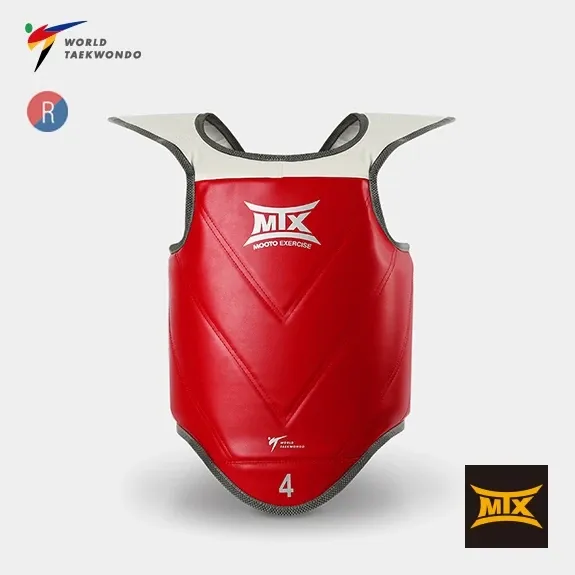
MTX 2 Reversible Chest Guard
'MTX’是为全球所有跆拳道运动员的初级训练及比赛提升而设计的产品线。不仅品质优良,价格合理,任何跆拳道选手均可无负担地佩戴使用。
All results, athlete names, career details and schedule information in this article are taken from the World Taekwondo official report 'Iran Wins Two Golds and Uzbekistan One as Para Taekwondo Concludes in Nagoya' (21 October 2026). Rule wording follows the official language verified in the first two reports of this series; nothing has been inferred or added.