The first gear question most taekwondo beginners ask is not about the dobok or protectors - it is "when will my belt change color?". The belt is the most faithful record of your training journey: it follows you through every promotion exam and reminds you to stay humble. This guide covers the belt ranking order, the meaning of each color, the standard tying method and buying essentials - whether you are a brand-new student or a dojo owner preparing a unified uniform order.
Taekwondo Belt Ranks: The Road from White to Black
Taekwondo belts use a dual system: before black belt, ranks are called "Gup" (levels), where a smaller number means a higher level; after black belt, ranks are called "Dan" (degrees), where a higher number means a higher degree. The most common color sequence is white, yellow, green, blue, red and black. Some schools add transitional colors such as orange, purple or brown to fine-tune the stages - always follow your own school's promotion system, but the meaning behind each color is shared across the world.
Each belt color carries a metaphor of growth: white symbolizes a blank page and the beginning; yellow symbolizes the seed in the earth, where fundamentals take root; green symbolizes a growing plant, as techniques extend; blue symbolizes the sky, reaching higher; red symbolizes danger and maturity, reminding practitioners that their techniques now carry real power and require self-control; black symbolizes technical maturity - and a new beginning, recognized not just as a rank but as years of consistent practice.
After Black: Dan Ranks and the Poomsae System
Black belts are typically ranked from 1st to 9th dan, administered under the Kukkiwon system. Juniors who pass the exam usually receive Poom (junior) ranks first, which convert to the corresponding dan upon adulthood. Promotion exams vary by level: color belt tests focus on basic movements, poomsae and breaking, while black belt exams add sparring and theory, examining the practitioner's understanding of taekwondo's spirit rather than technique alone.
For dojo owners, a clear rank system is itself part of the teaching structure: the interval between exams, the test standards and the belt awarding process directly affect student retention and renewal rhythm. Regular promotion exams give students a visible growth path - one of the most effective ways to keep students engaged over the long term.
How to Tie the Belt: The Standard Double-Loop Knot
The double-loop knot is the most widely used standard tie worldwide - symmetric, secure, and unlikely to come loose even during intense movement. Step by step: first, place the midpoint of the belt at the center of your abdomen and wrap both ends behind your back; second, cross the ends behind you and bring them back to the front, completing two full wraps; third, cross the ends in front and pass the lower end from the inside out through the gap between the two wraps; fourth, pull upward and tighten both ends so the knot forms a symmetric double loop with both tails of equal length.
There are only two tests for a correct knot: the loop is symmetric and both tails are equal in length. Tying your belt before training is also the first step of getting into the training mindset.
Beginners make three common mistakes: wrapping only once so the belt comes loose during training; the knot drifting to one side, breaking symmetry; and one tail noticeably longer than the other. Practice in front of a mirror and check your belt before every session - within two weeks it becomes muscle memory. For young students, parents and coaches can demonstrate in the first few classes; the key is helping children understand that tying the belt properly is itself part of training discipline.
Buying a Belt: Length, Material and Details
Belt length should allow two full wraps around the waist with enough left to tie naturally. Common sizes are 160-180cm for children and 240-280cm for adults. Taller or larger-waisted practitioners should choose 280cm or longer. When in doubt, follow your dojo's unified standard - consistent belt sizing also makes promotion ceremonies look neater.

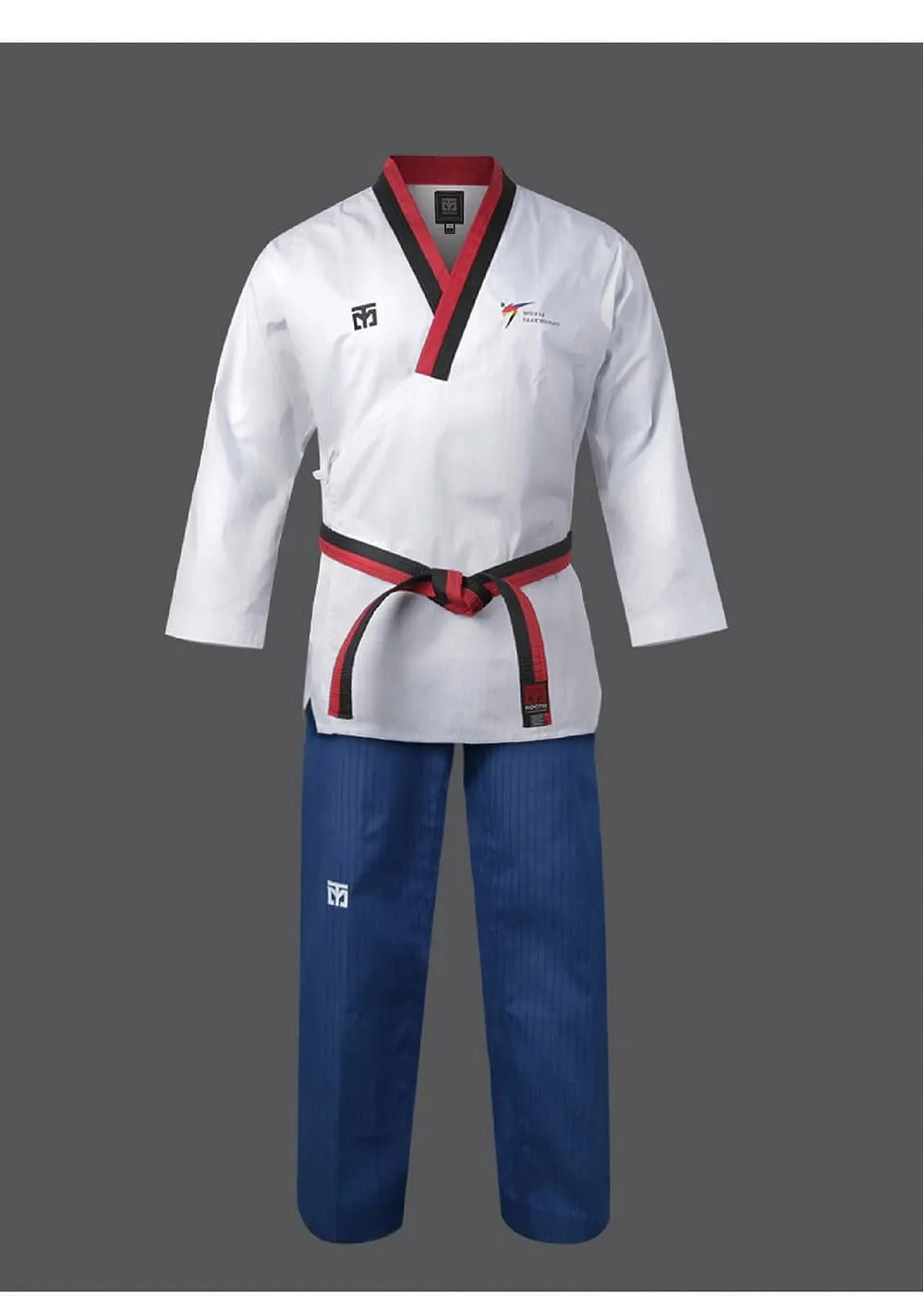
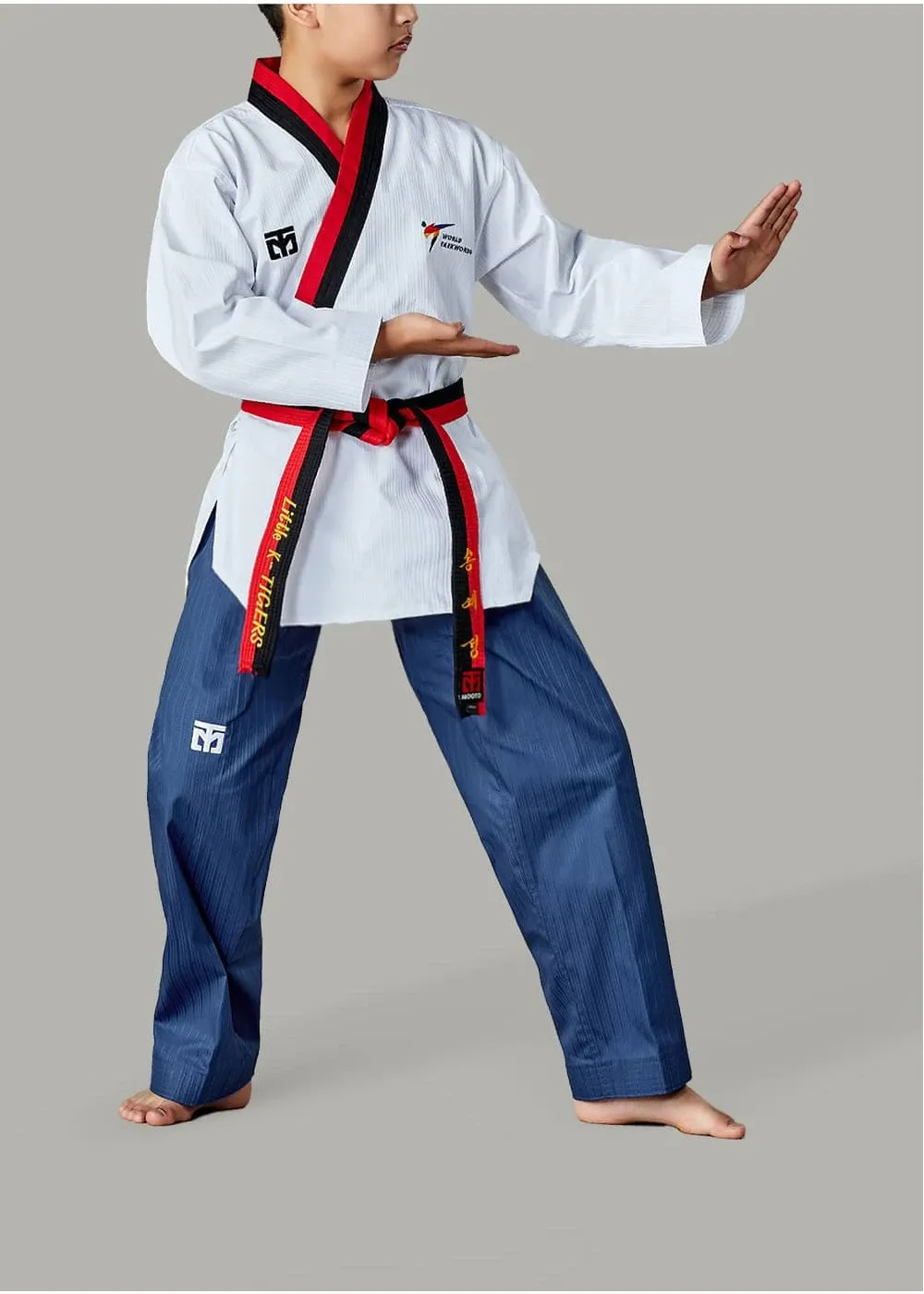
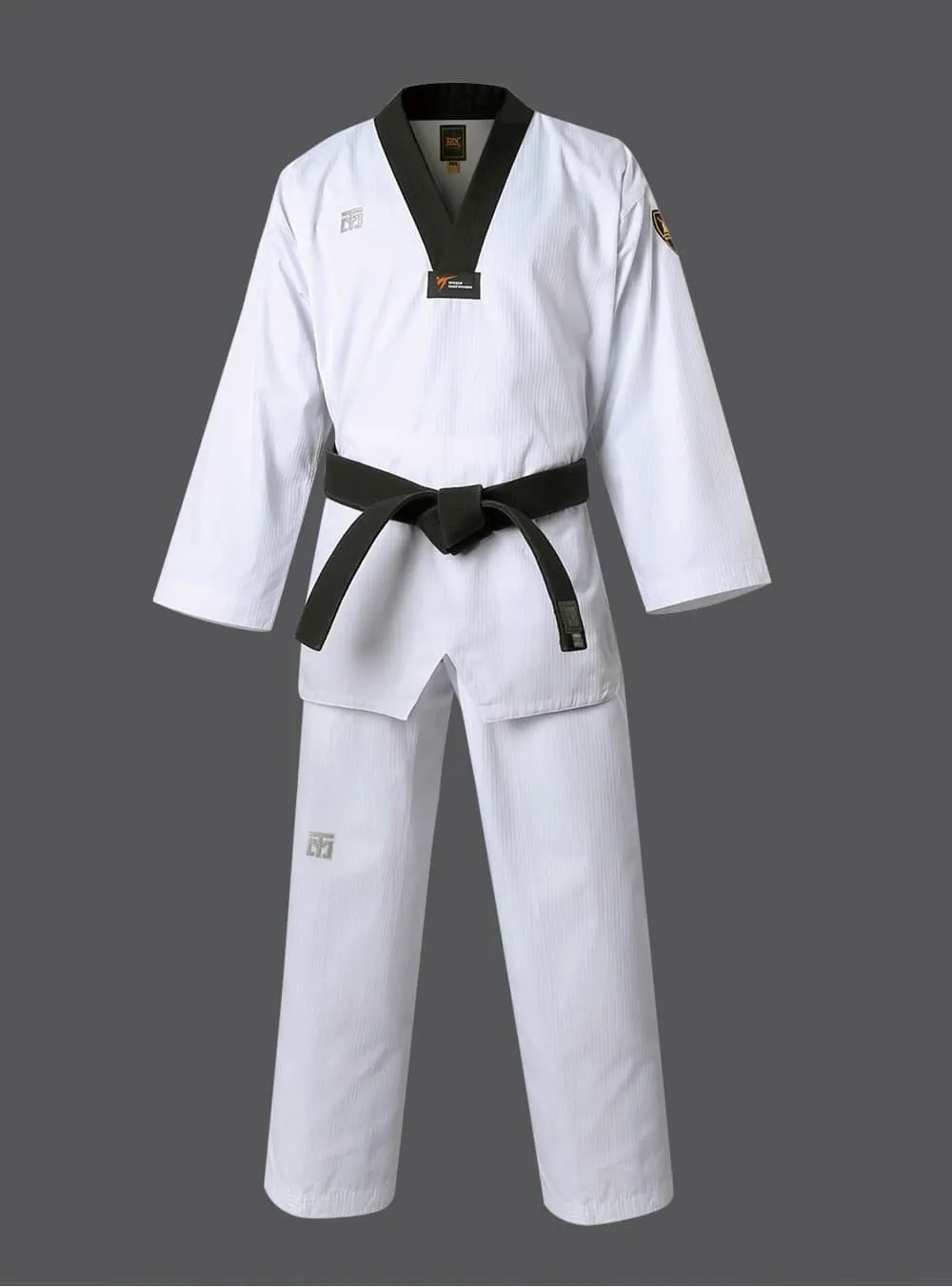
EXTERA 6 Kyorugi UniformMTX 2 Standard Uniform
FAQ
Q1.What is the taekwondo belt order?+
The most common order is white, yellow, green, blue, red and black; some schools add orange, purple or brown as transitional colors. Ranks before black are called Gup; ranks from black onward are called Dan.
Q2.What is the standard way to tie the belt?+
Use the double-loop knot: place the midpoint at the front, wrap twice around the waist, cross the ends in front, pass the lower end from inside out through the gap between the two wraps, and tighten so the knot is symmetric with equal tails.
Q3.What length belt should an adult buy?+
Adults commonly use 240-280cm and children 160-180cm, based on two full wraps with enough left to tie; taller or larger-waisted people can choose 280cm or longer.
Q4.How are black belt degrees divided?+
Black belts are ranked 1st to 9th dan under the Kukkiwon system; juniors receive Poom first, which converts to the corresponding dan in adulthood.
KEY TAKEAWAYS
- →Belt ranks use the Gup-Dan system; the common color sequence is white, yellow, green, blue, red and black, with black belts divided into 1st-9th dan
- →Each color carries a growth metaphor: white is the start, red reminds self-control, black marks maturity - and a new beginning
- →The standard tie is the double-loop knot: two wraps, passed through from the inside, symmetric with equal tails
- →Choose belt length by size - 160-180cm for children, 240-280cm for adults - and material by training intensity (cotton or cotton-polyester blend)
- →Dojo bulk buyers should plan color ratios by promotion rhythm; bulk inquiries can be directed to MOOTO