In taekwondo sparring, the hardest skill is rarely the kick itself. It is making the opponent react at the wrong moment. That is what a feint is for: not theatrics, but one genuine start that shifts the opponent's weight half a step out of position. That half step decides whether your second leg has distance and power.
What a feint really is: move the weight first, the leg second
Many athletes think of a feint as "kick halfway and pull it back". In competition this pays very little: a half-thrown kick burns energy and leaves you balanced on one leg. A useful feint is closer to a half-step start. The front foot moves, the hips give a signal, and the actual kick is held back until the last moment.
Whether a feint worked comes down to one indicator: did the opponent's weight shift, or did you change the direction of their start? If the weight did not move, you produced motion, not an invitation. This is the main reason some athletes feint constantly and still score very little.
The only real measure of a feint: the opponent's weight moves, or their start direction changes.
Four inductions you can train
1. Step-in induction: half a step of pressure, then the rear-leg roundhouse
Take a half step forward with the front foot, keep shoulders and hips square, and force the opponent to choose between retreating and pressing in. The instant they retreat, the distance opens and the rear-leg roundhouse finds its window. Three checkpoints: no more than half a step, weight never passes the front foot, and no extra dip before the kick.
2. Hip-feint induction: sell the rear-leg attack
A small hip swing — open and close — usually triggers a reflex guard lift or a lateral shift. Switch to a switch-step roundhouse or a front-leg angle change and attack the gap that the reaction created. The hip swing has to stay reversible: you must still be able to pull it back and make a second choice, otherwise it is just wasted motion.
3. Gaze and breathing induction: load the upper body
Where the eyes pause and how the breath moves also leak information, and both can be used in reverse. A brief look at the head area, then a quick return of the gaze to the trunk, usually pulls the opponent's guard half a beat upward. For young athletes this is the easiest induction to learn and the one most often overlooked.
4. Retraction induction: trade a fake kick for a counter
Show a clear intention to kick, then retract and change position the moment the opponent starts their counter. This turns a feint into an actual scoring chance. It requires accepting that this particular kick is not meant to score: the purpose changes from hitting to making the opponent move first. Once it becomes a habit, your counter game stops being reactive waiting and starts being designed.
Second-step start: the step after the feint is the scoring step
A complete feint attack usually has two starts: the first induces, the second scores. The first must stay within half a step, with the hips held in a reversible angle and the gaze off the floor. Otherwise the second start arrives with no distance and no support or hip rotation to borrow.
Three mistakes repeat constantly. The first start is thrown as fast as a real kick, so it reads easily. The induction uses only hands and upper body with no footwork behind it, so the opponent never has to move their weight. Or the athlete pauses before the second start and hands the rhythm back. The fix is straightforward: split the two starts, drill the half-step control of the first, then drill the transition timing, and only then combine them in conditioned sparring.
"A feint is not there to fool anyone. It is there to make the opponent decide first."
Pad-fed drill design: turning the feint into a reflex
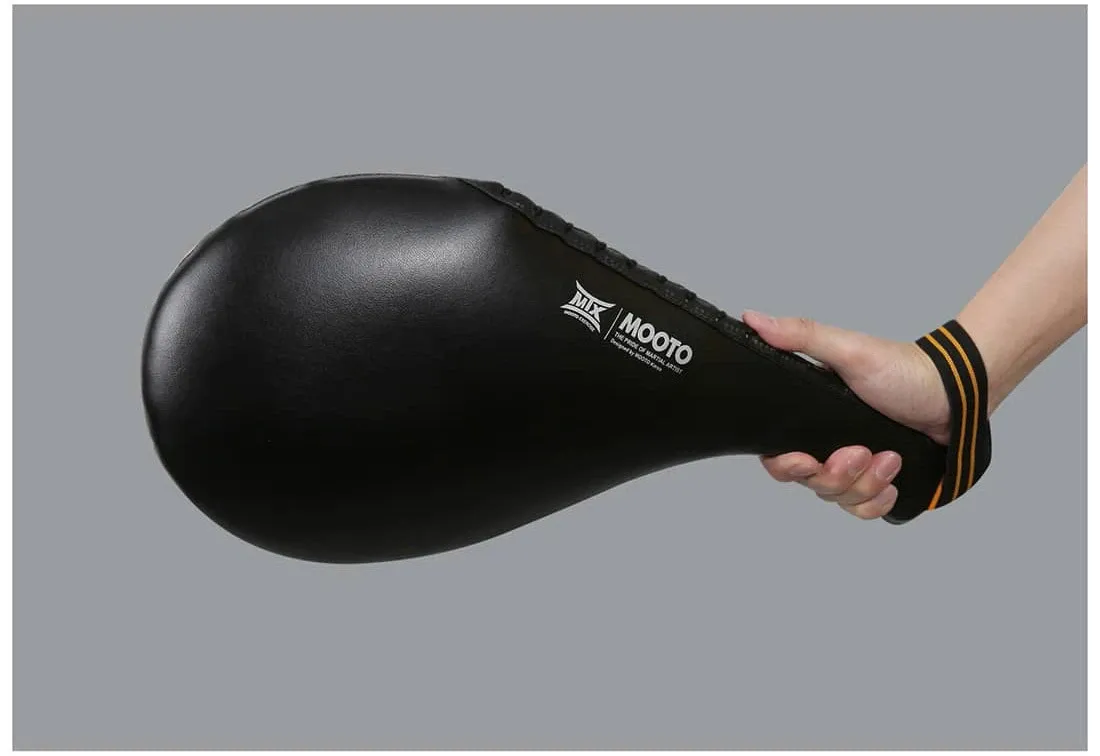
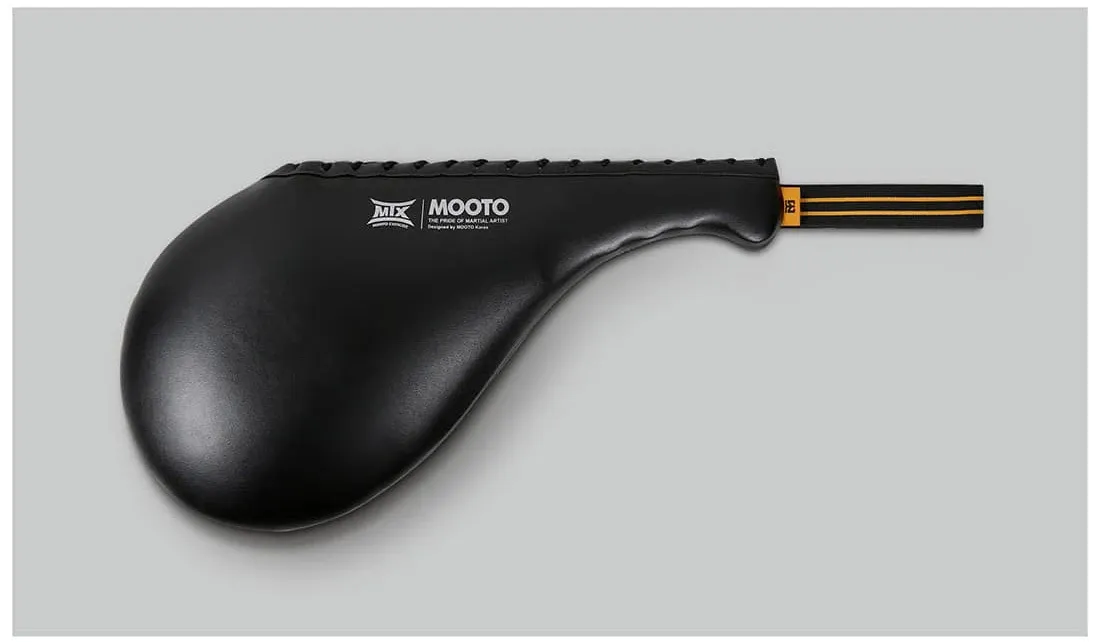
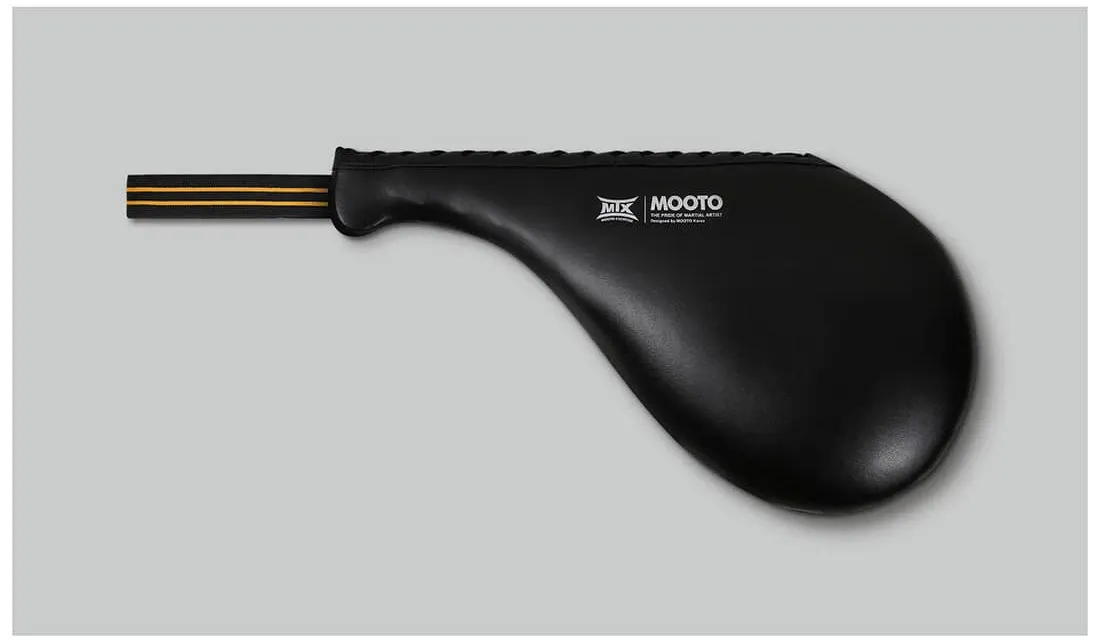
Training feints with targets is closer to competition than air work, because the coach controls the "opponent's reaction". Take the MTX Target Mitt: the single paddle suits fixed-position landing calibration, and the double paddle suits alternating legs and consecutive kicks. The coach presents the target at random positions and distances and requires one completed induction before the kick is allowed.
A three-set cycle works well. Set one, fixed single paddle, focused only on half-step control of the first start. Set two, random double paddle, with the coach switching position the moment the athlete starts, forcing a genuine second start. Set three, timed combinations, for example 30 seconds per set, 3 to 5 sets, to test induction quality under fatigue. Score the drill on whether the induction succeeded, not on how many times the pad was hit — otherwise athletes will instinctively abandon the feint and just race for contact.
How to schedule it in a dojo: youth class versus competition team
Youth classes do not need multi-stage inductions. One induction plus one kick is enough: half-step in, rear-leg roundhouse, repeated until the motion is clean. The goal at this stage is understanding the order — foot first, kick second — not memorising more combinations.
Competition teams can add video review and opponent habit notes. Record each athlete's habitual defensive reaction, then design inductions against it. This is the step that moves competitive taekwondo tactics from instinct to something that can be reviewed and repeated.
Gear and safety
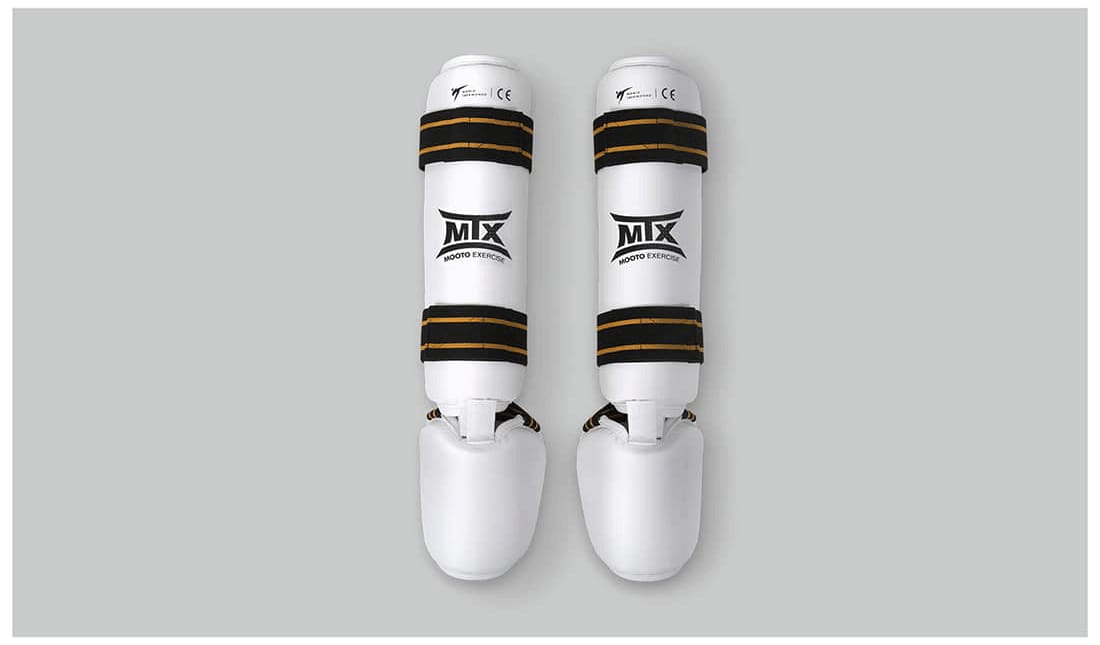
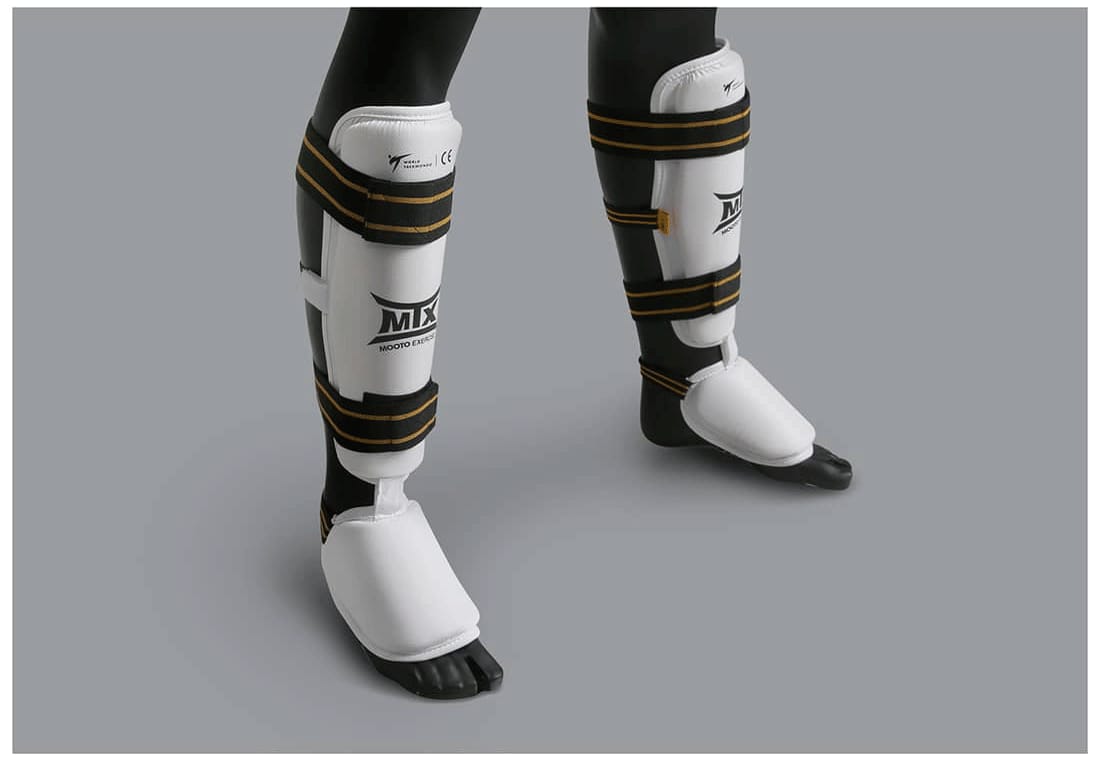
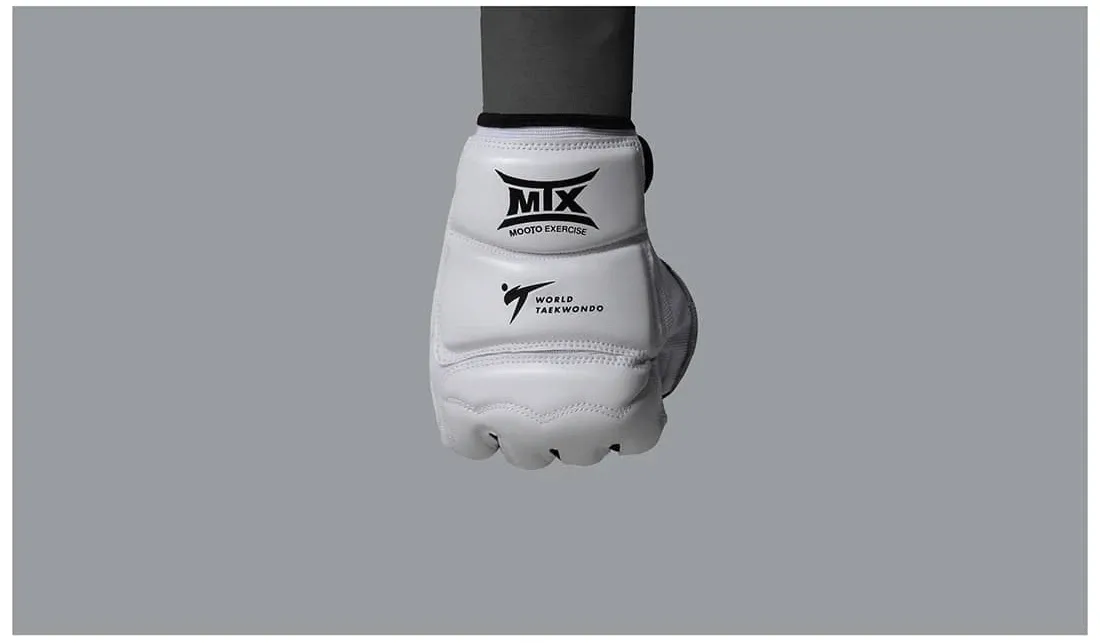
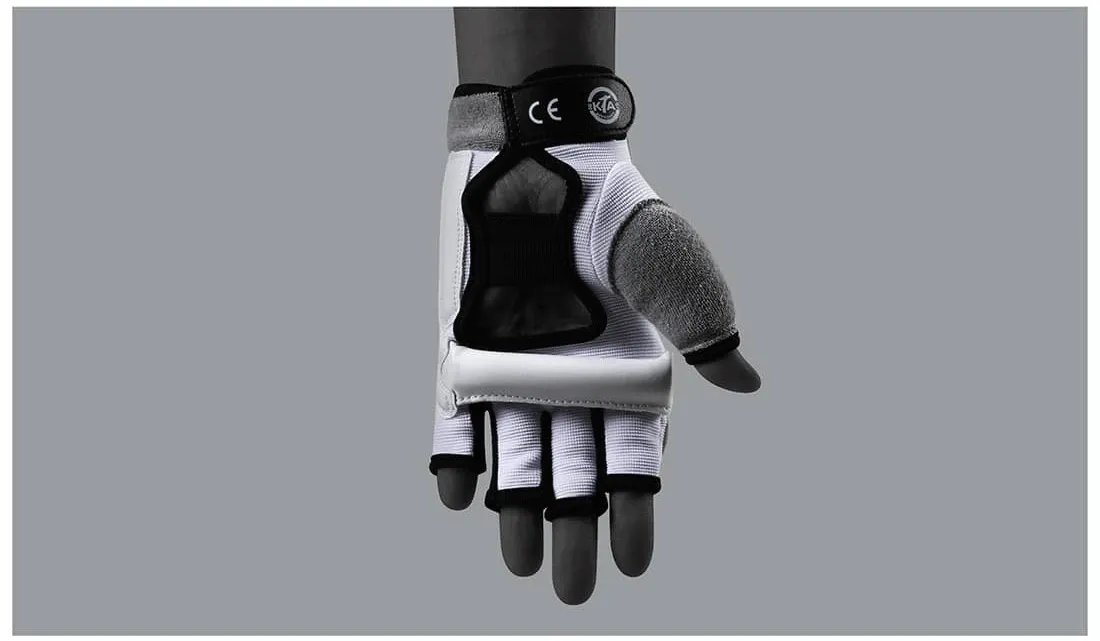
Feint training keeps both legs in single-leg support with frequent restarts, so hand protectors, a mouthpiece and instep protectors should stay on for the whole session. Headgear with a face cover clearly lowers the risk of facial abrasions in contact rounds. On the equipment side, choose a target mitt with stable rebound and an intact striking face; a collapsing pad is a common cause of foot and instep sprains.
Frequently asked questions
FAQ
Q1.How long does it take before a feint works in sparring?+
It depends on whether you split the skill. Drilling the half-step control of the first start separately from the second start, then combining them in conditioned sparring, usually produces results faster than repeating full combinations. Use "can produce one effective induction consistently in conditioned sparring" as the benchmark rather than a number of days.
Q2.Can a feint draw a penalty for stalling?+
A feint in itself is not a foul. But using feints to delay, with both athletes avoiding attacks for a long stretch, falls under the WT Competition Rules provisions on passive avoidance. The dividing line is intent: a feint should create an attacking opportunity. For exact wording, always refer to the current WT Competition Rules.
Q3.How do I train feints without a partner?+
Use a mirror or phone video and work on the half-step start and a reversible hip angle. Watch two things: does the weight cross the front foot, and does the gaze drop to the floor. If you have access to a hanging target, run the three-beat pattern of induce, start, kick.
Q4.Do feints belong in poomsae?+
No. Poomsae scoring looks at accuracy of the movement, power and rhythm. Deliberately adding feint-style distortion reads as a technical specification error. Feints are a sparring skill, and the training goals of the two disciplines are different.
Key takeaways
KEY TAKEAWAYS
- →A feint is judged by whether the opponent's weight moves, not by how big the motion is.
- →Keep the first start within half a step to preserve distance and power for the second.
- →Score pad drills on successful induction, not on how often the pad is hit.
- →One-stage inductions for youth classes; video review and tailored inductions for competition teams.
- →Keep mouthpiece, hand protectors and instep protectors on, and pick a target mitt with stable rebound.
More sparring and kicking drills are available on the Training & Technique page. The second-step start in this article works best when trained alongside the roundhouse power chain guide and the rhythm, distance and timing guide. For target mitts, see the MTX Target Mitt; dojos and distributors can contact MOOTO through the on-site inquiry form for bulk configuration.