Hand protectors are the piece most often bought on autopilot: a dojo orders one general size, hands them out by headcount, and only finds the problem when someone complains about knuckle pain in sparring or a wrist strap comes loose mid-round. This guide splits the purchase into four questions - which three impact surfaces the protector actually covers, why segmented padding is not a cosmetic detail, which two measurements set the size, and how a dojo should stock and retire them by class structure.
Three impact surfaces, not simply five fingers
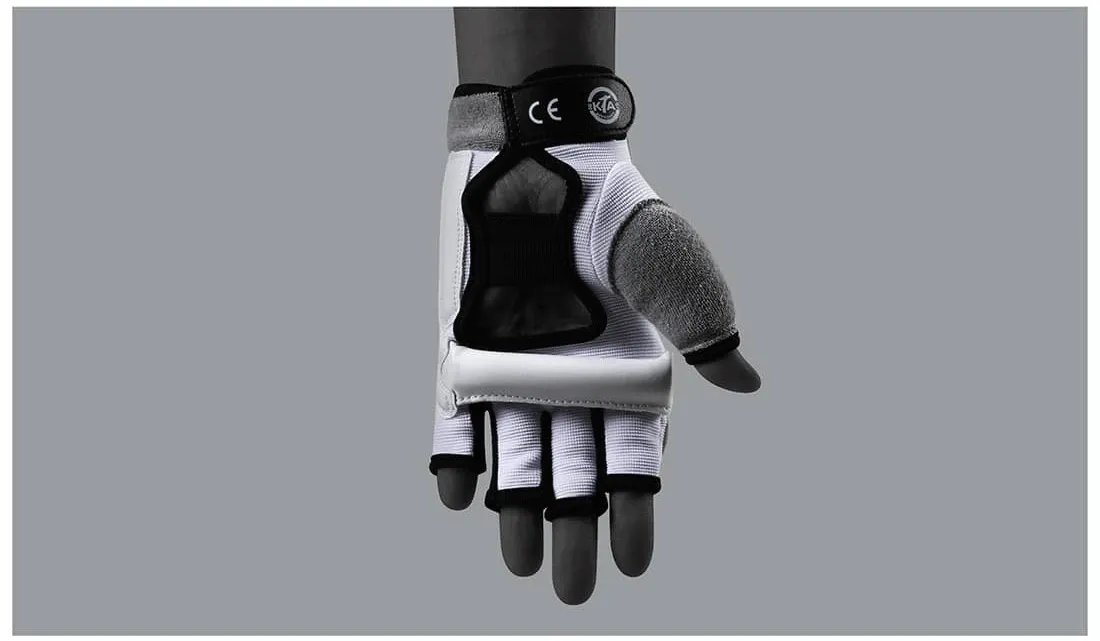
A hand protector follows the same logic as a chest guard or headgear: the job is not to wrap the whole hand but to spread impact across surfaces that can take it. The first is the back of the hand and knuckle line, the most frequent contact point against an opponent's gear and the thickest padding zone. The second is the finger joints, usually built as a split-finger structure so each finger bends independently and grip on an opponent's chest guard does not drag the others. The third is the wrist, held at a stable angle by the wrap strap rather than by padding. For how the pieces fit together as a set, start with MOOTO's protector buying overview.
Thin protectors fail in sparring not because of the thickness number but because of the area over which force is spread. Once padding is compressed against bone, the same impact lands on a smaller surface and pain follows. When segmentation is done well, each plate can shift slightly as the hand closes, force is distributed onto neighbouring plates, and the feel becomes steadier. That is also why the same pair can be rated completely differently by a fighter who keeps a closed fist and one who works with an open hand.
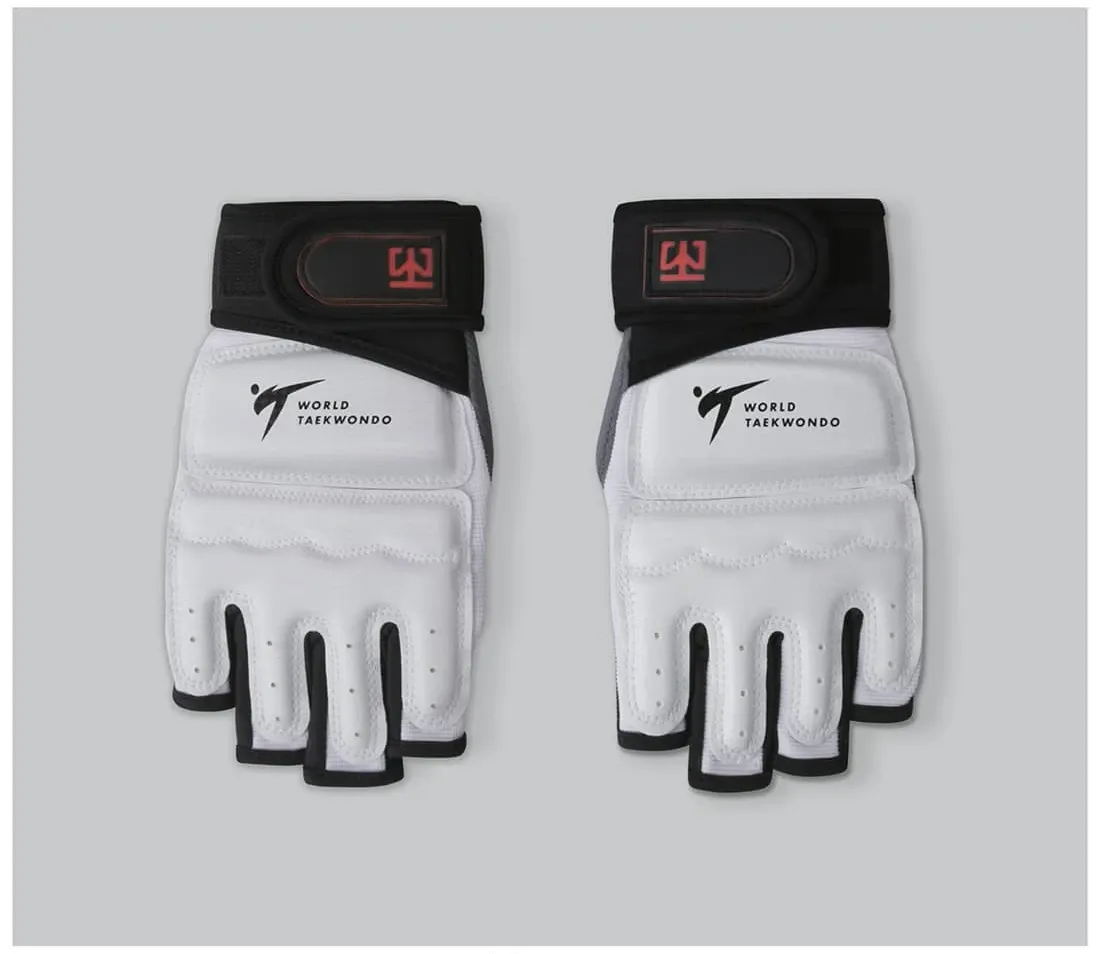
Segmented padding: three plates and four plates are not the same
The number of padding segments across the back of the hand decides how the protector follows a closing fist. More segments mean smaller plates that are less likely to lift and press on the knuckles when gripping; fewer segments give larger, more continuous coverage but the ends tend to lift outward as the hand closes, so the pad migrates during repeated gripping - and once it migrates, protection sits over the finger gaps, the last place that should carry load. The check is simple: put the pair on and open and close the fist ten times, then look at whether every plate stays against the skin or one has been pushed up.
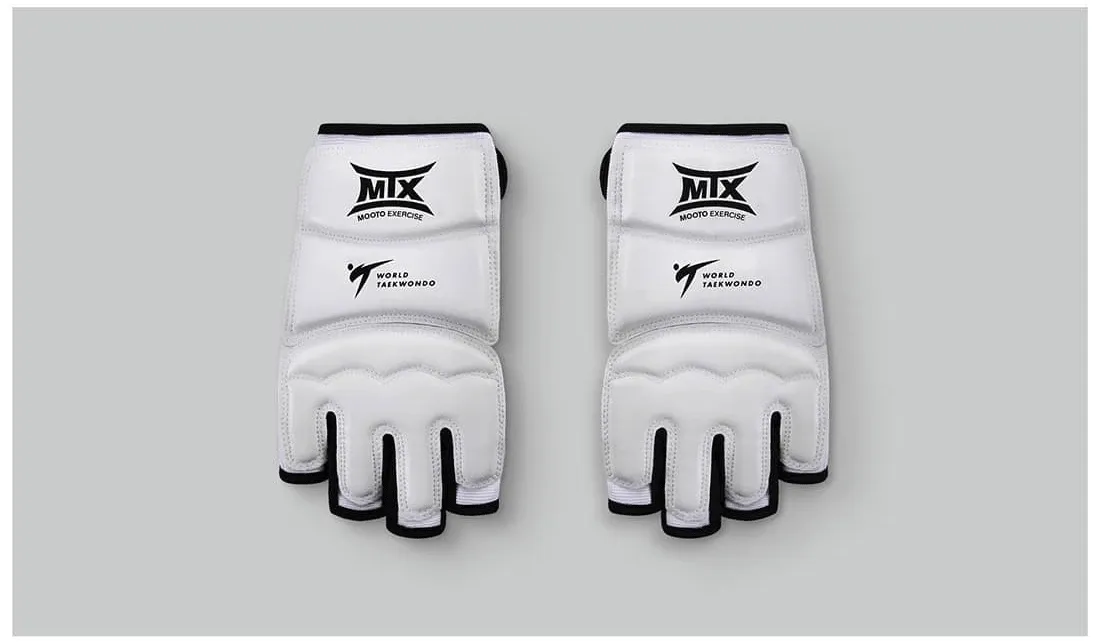
Both hand protectors currently listed on the MOOTO site use segmented structures; they differ in wrist fixation and cut. The EXTERA 2 Hand Protector belongs to the EXTERA series, described on the site as an ergonomic line built for professional athletes and used for both training and competition, with a wider wrap strap and a larger fixation area. The MTX Hand Protector belongs to the MTX series, described around basic training and competition progression with an emphasis on accessible pricing, and its strap is narrower - a better fit as a standing item for large classes. Full structure and sizing for both can be checked on the product pages.
Check two things first: whether the back of the hand is segmented, and how wide the wrist strap is. Material comes after both.
Materials: tough outside, absorbing middle, close inside
Packaging shown in the site's product images labels the materials as PU, EVA and NEOPRENE. Read as a structural division of labour: PU on the outside for abrasion resistance and low water uptake, so a wipe-down is enough after training; EVA in the middle for rebound and shock absorption; NEOPRENE (chloroprene rubber) in the lining or panelling to give fingers and wrist elastic room to move. Exact ratios and lamination per model should follow official documentation - treat the label as a clue to structure, not as a spec contest.
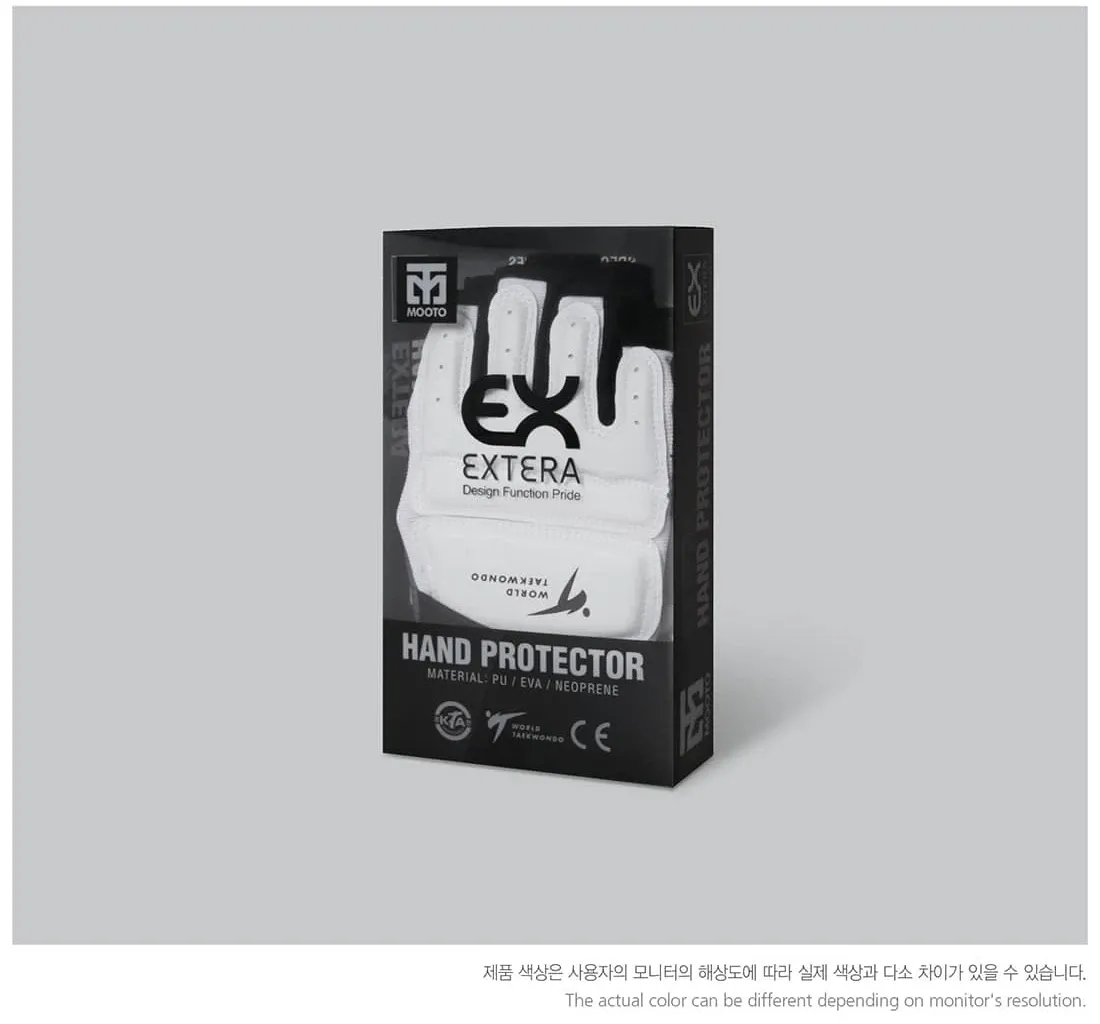
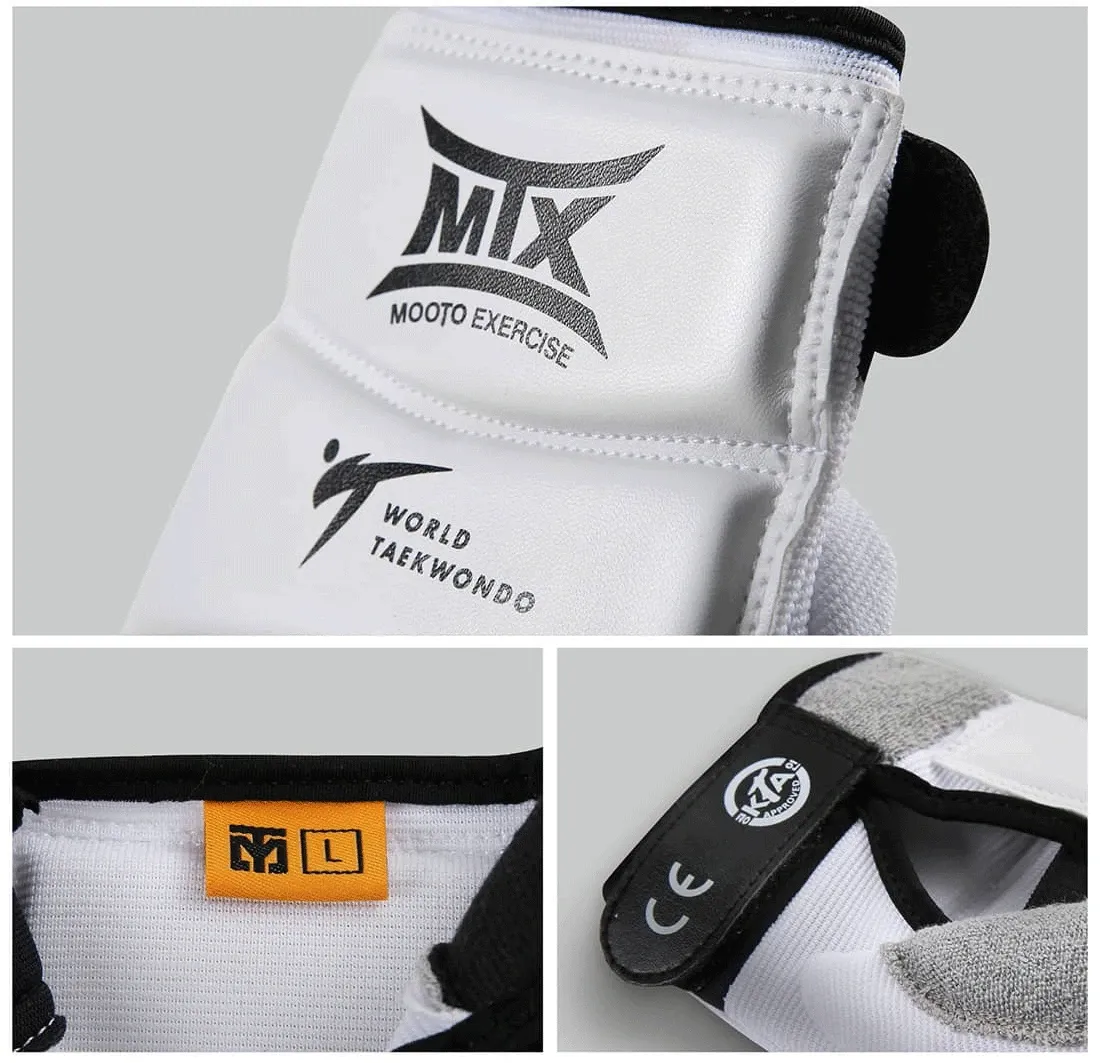
The lining deserves the same attention. A fine mesh lining reduces heat build-up and slipping over long sessions, and how neatly the seams are run decides whether the pair starts opening there after repeated washing. Detail shots on the site also show the size tag and the World Taekwondo, KTA and CE marks inside the wrist strap. One caveat: marks are a purchasing reference only. Whether a specific protector meets the requirements of the current season should be confirmed against World Taekwondo's equipment list and the event technical manual - not inferred from packaging alone.
Hand protector sizing: two measurements, done once
Unlike a dobok, a hand protector cannot be estimated from height and weight; it only depends on the hand. The first number is palm girth - a loop around the widest part of the knuckle line, snug but not tight. The second is hand length, from the wrist crease to the tip of the middle finger. Write both down, then read the brand's size chart. The two protectors on the site differ in range: the EXTERA 2 Hand Protector offers seven sizes from 2XS to 2XL, with size options marked as numeric bands; the MTX Hand Protector offers five sizes from XS to XL. Finer ranges make it easier to fit junior and female athletes.
Then handle the edges. When the two numbers fall into different sizes, take the larger one: too small presses on the web of the thumb and the base of the fingers so the joints are compressed in a closed fist, which hurts more; too large lets the padding slide and the strap has nothing to lock. Children's finger proportions differ from adults, so pick by actual palm girth and try the pair on the spot, checking three things - whether the base of the fingers is pulled when the fist closes, whether the strap gives pressure without pinching, and whether the finger seams rub. If any one fails, change size.
Training and competition: check-in rules and feel
Training weighs durability, washability and cost: a clearly structured, washable protector is enough. Competition asks one step more - the pair has to sit within a set with chest guard, headgear and leg guards, its colour has to work with the uniform and the rest of the gear, and at check-in it must be intact, close properly and show no obvious damage. A worn pair is not a question of squeezing through one more match; it is a question of passing equipment control at all. Dojos that order replacements a week before an event usually spend more time at the check-in desk than the purchase would have taken.
For set purchases, stay within one series for a season so size and feel do not drift between mismatched lines. The order of work follows the headgear guide and lower-body protector guide below: decide the form by body part first, then set the size per athlete.
Dojo stocking: by class structure, not by headcount
Multiplying total students by a coefficient is the easiest method and the least accurate. Layer it instead: the competition team gets one dedicated pair per athlete plus spares at 10-15% of units in use; large classes are stocked to the maximum number on the floor at the same time, not to registrations; trial classes get their own low-cost general size so beginners do not wear through competition pairs. Do not guess the size distribution - measure palm girth for ten students and the centre of gravity for that class becomes visible, so reorders can cover that band plus one size either side.
A purchase list should state six things: model, size, colour, quantity, spare ratio and acceptance criteria. At intake, check seams, hook-and-loop closure, the rebound of each segment and whether the lining is pilling; keep one pair from each delivery as a reference sample so later restocks can be matched. More guides on related topics are on the product guides page.
"Hand protector problems are rarely about paying too much. They are about the wrong size, on the wrong athlete."
Washing, drying and when to retire a pair
Hand wash, mild detergent, dry in shade - three basics. A washing machine's heat and spin cycle takes the rebound out of the padding early, and direct sun accelerates ageing of the outer layer. Close the hook-and-loop before washing so it does not snag the lining, and skip fabric softener, whose residue reduces grip. Retirement is judged on four signs rather than on time in service: segments that stay collapsed, closures that no longer hold, seams opening at the strap or finger seams, and a smell that persists after washing. Any two of those and the pair should drop to trial-class duty or be scrapped.
EXTERA 2 Hand Protector
EXEXTERA MOOTO‘EXTRA’系列是专为跆拳道职业选手设计的产品系列。 EXTERA产品采用人体工学设计,非常适合训练和比赛使用。
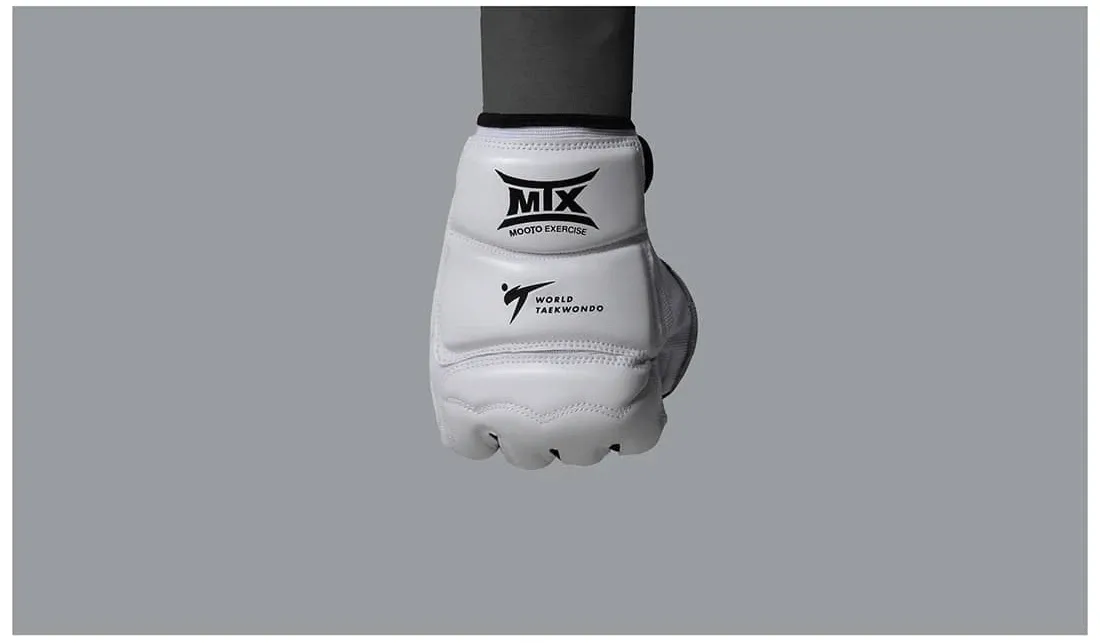
MTX 2 Hand Protector
MTX 是为全球所有跆拳道运动员的基础训练及比赛提升而设计的系列。不仅品质优良,还承诺合理价格,使每位跆拳道运动员都能无负担地佩戴使用。
KEY TAKEAWAYS
- →A hand protector covers three impact surfaces: knuckle back, split-finger joints and the wrist strap.
- →Segment count on the back of the hand and strap width decide real-world feel more than the material label.
- →Size comes from palm girth and hand length only; when they diverge, take the larger.
- →EXTERA 2 Hand Protector offers seven sizes from 2XS to 2XL; MTX Hand Protector offers five from XS to XL.
- →Stock by competition team, large class and trial class, with spares at 10-15% of units in use.