The three items most often improvised on a taekwondo gear list all sit below the waist: shin guards, instep protectors and groin protectors. Hand and head protection get compared carefully because they are visible and because they affect punching and vision directly. These three are usually waved through with a nod, until someone takes a kick on the shin in class, or until inspection reveals that the instep strap gave up months ago. This guide splits the decision into four parts: impact zone, build type, fit checks and dojang stocking.
Three zones, three different impact patterns
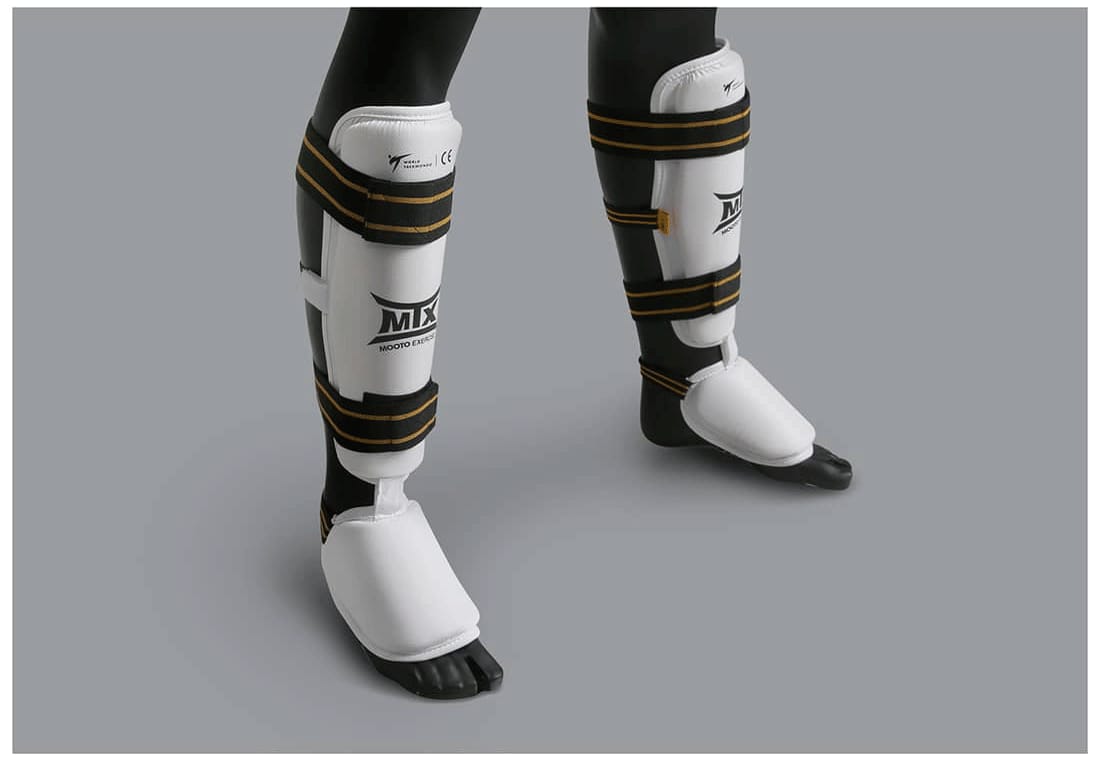
A shin guard covers the front of the tibia and the calf muscles. In sparring, that front edge is the first place to absorb force when blocking or checking, and it is also where the leg brushes an opponent's protector during spinning kicks. The structural priority is therefore continuous coverage with two-point anchoring: the top edge stops below the knee, the bottom edge closes above the ankle, and nothing in between can slide out of position.
The instep works differently because it is both a striking surface and a surface that gets struck. The instep contacts the opponent's protector to score, and it also has to survive landings and clashes. Fit therefore feeds back into technique: a loose instep slides during spinning kicks, while an over-tight one stops the ankle from relaxing into the kick, which reduces range rather than protecting it.
Groin protection is low-frequency but highest-consequence when missing. The common purchasing error is not omission but mismatch - male and female models used interchangeably, or a single generic size ordered for a mixed class. The three items are judged by different standards and those standards cannot be swapped.
Two builds: separate guards versus shin-and-instep one-piece
MOOTO's official taekwondo protector category currently lists 25 items, and the lower body comes in two builds. The separate build includes the EXTERA 2 Shin Protector, the EXTERA Pro Kyorugi Shin Protector and the MTX 2 Shin Protector. The one-piece build is the MTX 2 Shin & Instep Protector, which makes the shin and instep a single continuous piece.

The value of the one-piece build is continuity: there is no gap between shin and instep, fewer straps to fasten, and faster dressing - useful in large classes with tight turnaround and in competitions with tight inspection windows. The cost is that localised wear forces a whole-piece replacement. The separate build is the reverse: shin and instep are replaced independently and the fit can be tuned more finely, but dressing takes an extra step and it is easier to arrive on the mat wearing the shin guard and nothing on the instep.

Fit: three checks before you commit to a size
Sizing errors are harder to spot below the waist because length and girth matter more than palm width or head circumference. Test with three movements. First, bend the knee: the top edge should sit below the kneecap, not on it. Second, extend the ankle: on a one-piece build the instep section should travel with the joint instead of jamming against the base of the toes. Third, throw ten consecutive front kicks: the straps must not shift and the guard must not rotate. Only then is the fit acceptable.
Key point: shin guards are judged by length, instep protectors by ankle range, groin protectors by style and girth - the three standards are not interchangeable.
Groin protectors: style, gender and size banding
Groin protectors are listed by gender and structure: MTX 2 male and female models, the EXTERA 2 male model, and an EXTERA 2 female panty-type model. The panty type builds the retention into the garment itself, which reduces strap migration and suits high-frequency training and competition. Strap types are quicker to put on and their size range covers mixed-age classes more easily.
Order by gender and age band rather than treating one size as universal. Children and juniors are still growing, and groin protectors in those groups often need replacing within six months. Stock in age bands instead of buying one size for the whole class.

Training grade versus competition grade
The same zone is built differently at different grades. MTX 2 forms the training line below the waist, covering the shin guard, the shin-and-instep piece and male and female groin protectors. EXTERA 2 and EXTERA Pro Kyorugi form the competition line: the former offers a shin protector, a foot protector and an instep protector, the latter a competition shin guard. The split is decided by intensity and competition exposure, not by price - daily classes run on the training grade, competitive squads and competing athletes on the competition grade.
complete protector buying guide, and for family structure and spare-part tiering seeprotector family design.
Stocking a dojang: three layers and a replacement rule
Layer one is personal issue: groin and instep protectors are close-fitting, high-frequency items and should be one per athlete, never shared. Layer two is squad stock: two to three shin guards per size band, for athletes who forget theirs or for trial fitting. Layer three is consumables: the wear points are straps and instep edging, so keep spares equal to 10-15% of the in-use quantity rather than ordering after something breaks.
Replace by condition rather than by calendar: dead elastic, hook-and-loop that no longer grips, split instep edging or a collapsed shin lining - any one of these means replacement. Complete the full check a week before competition, not at the inspection desk.
protector configuration in the electronic scoring era.
product guides, then send an inquiry with athlete numbers, age bands, gender split and training intensity. We will map the size bands and return a configuration proposal with bulk pricing.
"The problem with lower-body protectors is rarely whether they were bought - it is whether they were matched."
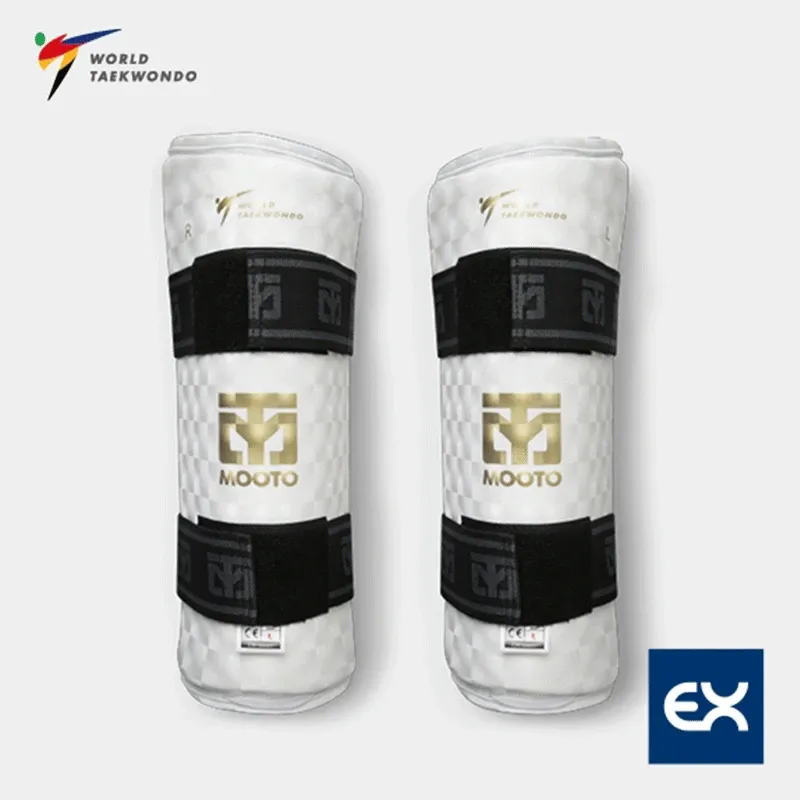
EXTERA 2 Shin Protector
请输入产品描述...
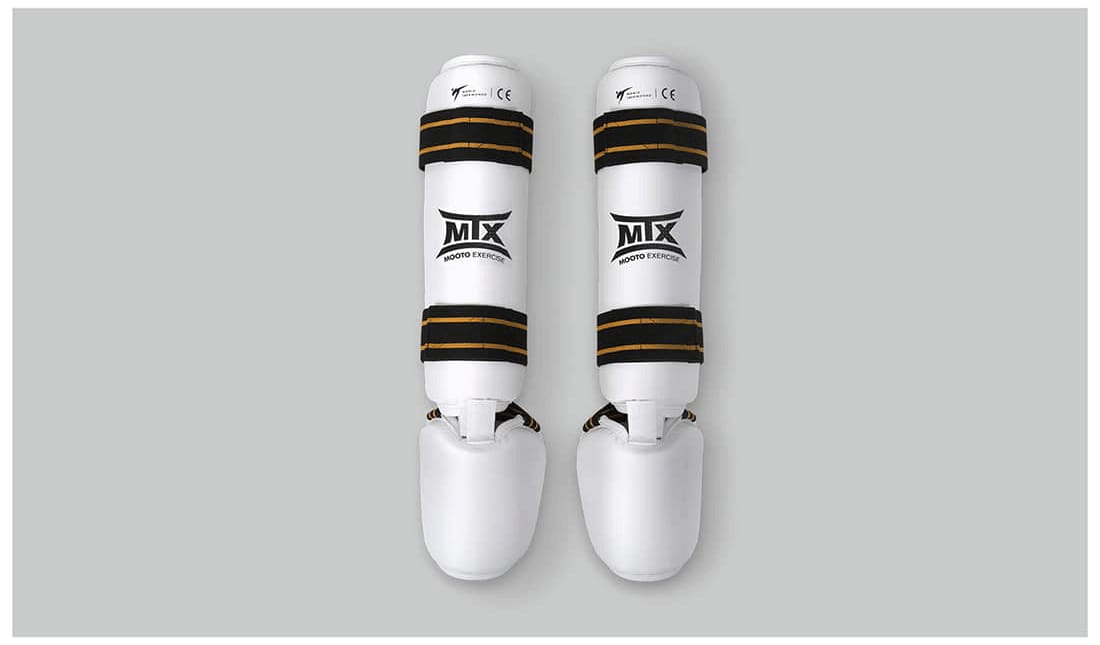
MTX 2 Shin & Instep Protector
MTX 是为全球所有跆拳道运动员的基础训练及比赛提升而设计的系列。不仅品质优良,还承诺合理价格,使每位跆拳道运动员都能无负担地佩戴使用。
KEY TAKEAWAYS
- →Shin, instep and groin protectors are judged by different standards: length, ankle range, style and girth.
- →Separate builds allow piece-by-piece replacement; one-piece builds give continuity and faster dressing.
- →Validate fit with knee bend, ankle extension and ten front kicks - not with height alone.
- →Stock in three layers: personal issue, squad stock, and consumables at 10-15% of in-use quantity.
- →Replace by condition, and finish the full check a week before competition.