The question buyers ask most often about protectors is "which size fits a 1.70 m junior?"; far less often they ask whether the set they are buying now belongs to the same product line as the piece they will need to reorder in three months. Treating protectors as a checklist of items to tick off, versus treating them as a few product lines organised by body segment, produces two very different results: the first cares about unit price, the second about consistency of fit.
Why look at protectors as families
A competitive taekwondo athlete must cover six zones: head, trunk, hands, legs, feet and groin. Any manufacturer serving those six zones has only two options: open a separate, unrelated line for each zone, or tie them together with one shared pattern and naming logic. MOOTO takes the second route, which is why in the official listing "EXTERA 2" is not a hand protector but a group of products whose names carry a segment suffix. In competition protectors, that naming prefix is the most visible trace of family design.
A family view answers three questions a single-item view cannot. First, spares: size bands across the segments inside one family correspond to each other, so an athlete stepping up a size does not need the whole chain re-measured. Second, colour and pairing: how red and blue are handled inside one framework decides whether inspection day ends with a missing piece. Third, replacement rhythm: the six zones wear at different rates, and only by layering core items and consumable items does stock sit in the right place.
The unit of purchase is not the piece but family x size x colour. Shared sizing and colour within one family is the cost bulk buyers actually save.
How many body segments one family covers
Take EXTERA 2 from the official listing: the family covers 10 items - hand, forearm and arm & elbow protectors for the upper limbs; shin, foot and instep protectors for the lower limbs; headgear; and three groin protectors (male, female, and a female panty-type version). All ten share one naming prefix, so writing a single series name on a purchase order is enough for the supplier to know the pieces come from the same line.
complete taekwondo protector buying guide and then pick specific models inside this family line.

Three coverage forms of headgear
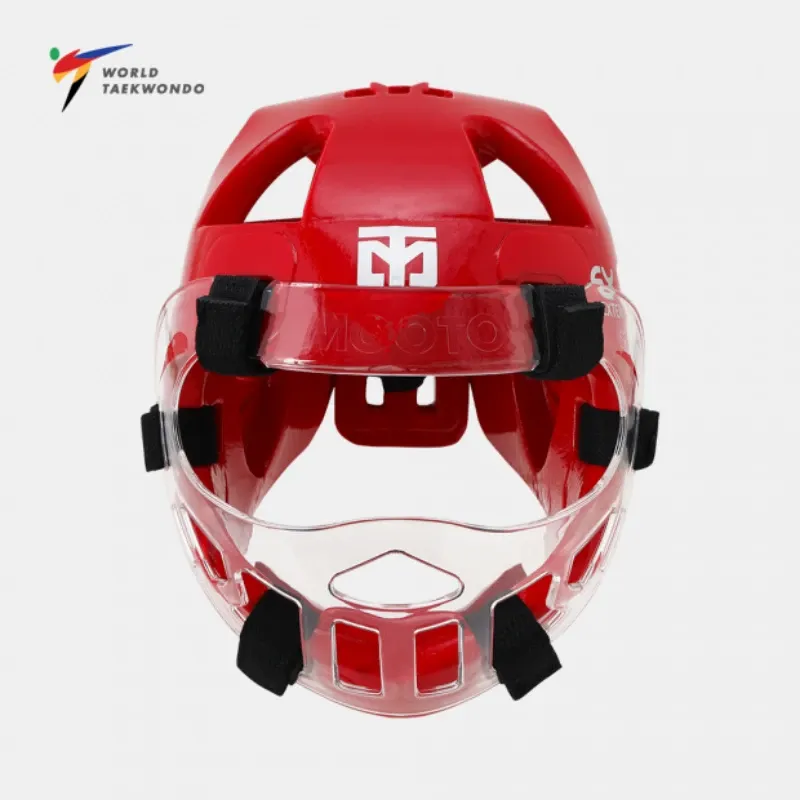
Headgear is the segment where the family varies most. The official listing shows three coverage forms: the base EXTERA 2 Headgear, the EXTERA 2 Pro Face Covered Headgear, and the third-generation EXTERA 3 Pro Face Covered Headgear. The third generation is listed in red and blue, with a white version filed under karate.
Each form maps to an occasion. The base headgear is the lightest with the fullest field of view, suited to daily sparring and entry-level competition; the face-covered version adds a transparent shield in front of the face for situations where the risk of impact to the nose and face is higher. This is where family design serves procurement directly: an athlete's base and face-covered headgear share the same size, so switching does not mean re-adapting to the fit.

Red, blue, and reversible: one set for two athletes
In competition the two athletes are identified by colour, so protectors naturally need to appear in pairs. There are two product-level answers: colour-split items, with a red and a blue version - which is how the face-covered headgear is listed - or both colours built into one product, the reversible approach. The Reversible Chest Guard in the official listing belongs to the second group; both the MTX 2 and MOOTO 2 lines include one.
For dojo protector purchasing these two answers carry two different stock pressures. Colour-split items require red and blue to be held in equal quantity, and whichever colour depletes faster creates a one-sided gap. A reversible item does the job of two, halving stock pressure, though its price structure differs from colour-split pieces. New dojangs on a tight budget usually start with the reversible chest guard and complete the colour-split headgear once class numbers stabilise.

How training and competition families relate
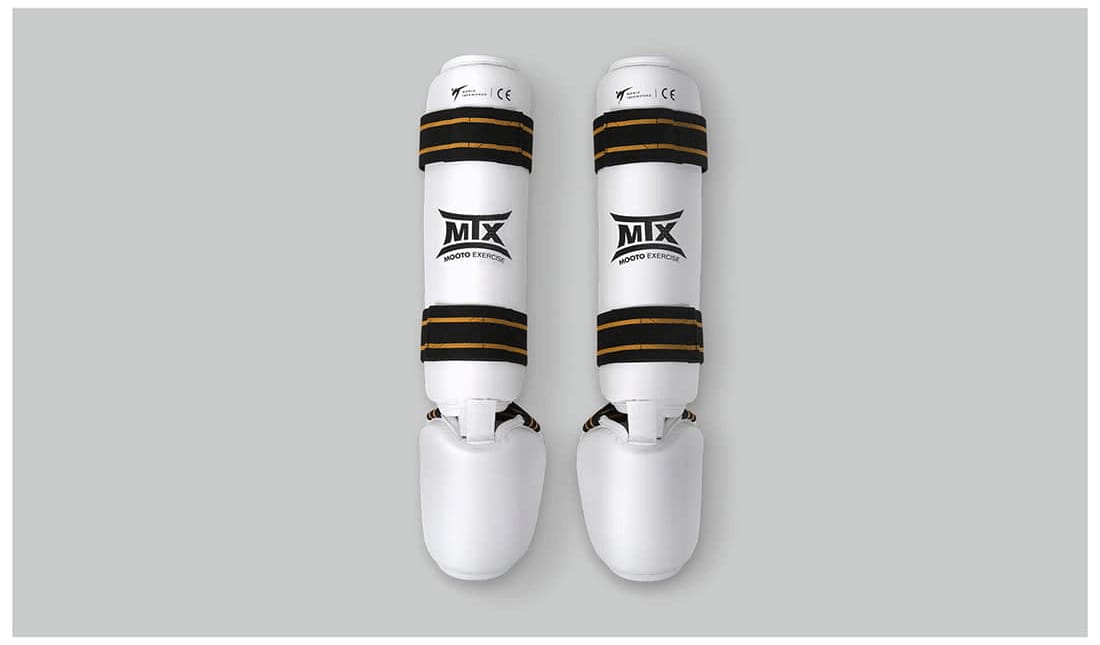
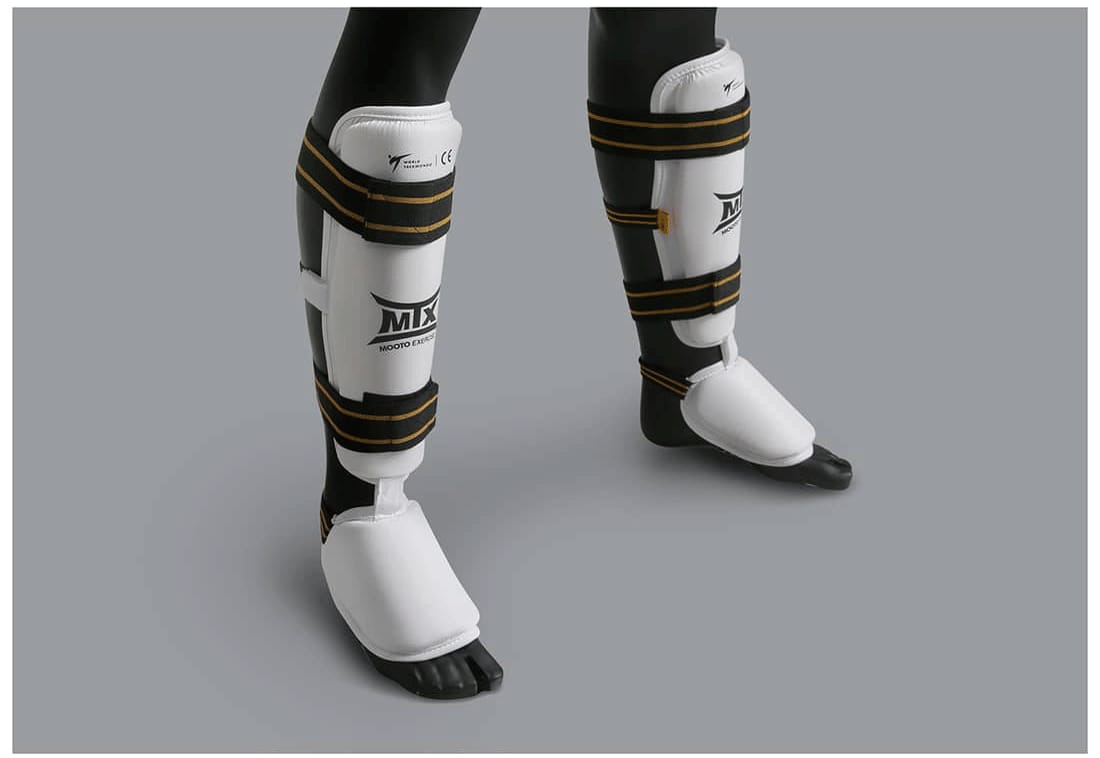
The same family logic runs in parallel across training grade and competition grade rather than replacing one with the other. Among the 43 items listed in the official protector category, MTX 2 forms the training family, covering hand, foot, forearm, shin, shin & instep, headgear, groin and the reversible chest guard. EXTERA 2 and EXTERA Pro Kyorugi form the competition family: the ten-item structure described above for the former, and forearm and shin protectors for the latter - the two segments where impact concentrates most in competitive sparring.
Protector setup in the electronic scoring era to confirm what the organiser provides and what the athlete must bring.
How dojangs and dealers stock by family
Turning family logic into purchasing action takes three layers. The first is the core family: fix the ratio of training grade to competition grade by the age structure of your students. The second is colour pairing: satisfy equal red and blue quantities first, then consider replacing some of it with reversible items. The third is consumables: foot, instep and hand protectors are the three fastest-wearing pieces and need dedicated spares across the core family's size band.
To configure a complete protector family around your student structure, and to confirm size bands and spare ratios per segment, send your student numbers, age structure and training intensity through the official inquiry form; we will return a family-based configuration proposal and bulk pricing.
"What family design actually solves is not visual consistency - it is making sizing and colour predictable under one shared logic."
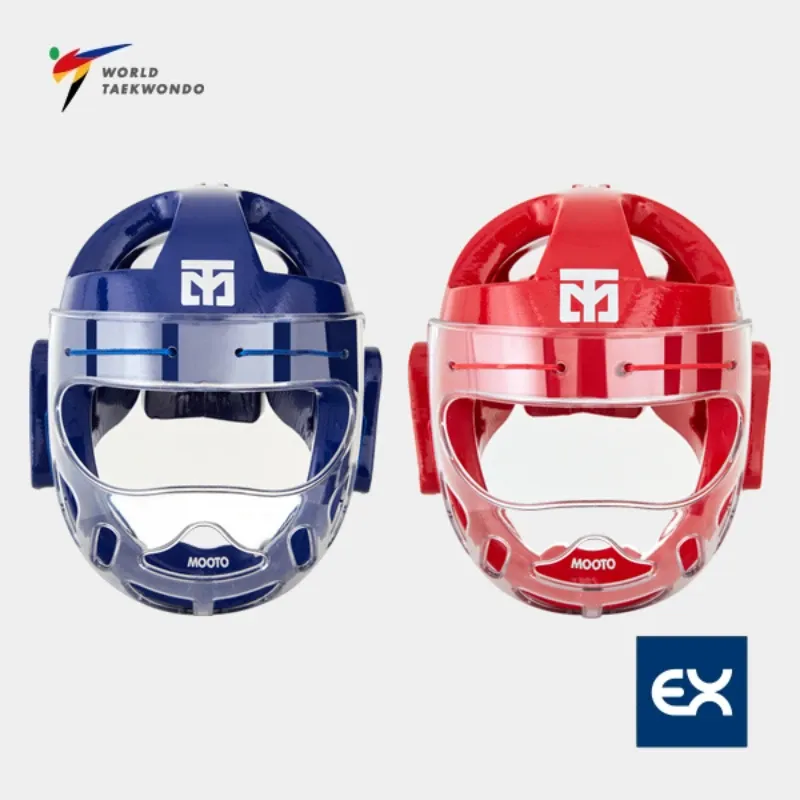
EXTERA 2 Pro Face Covered Headgear
请输入产品描述...
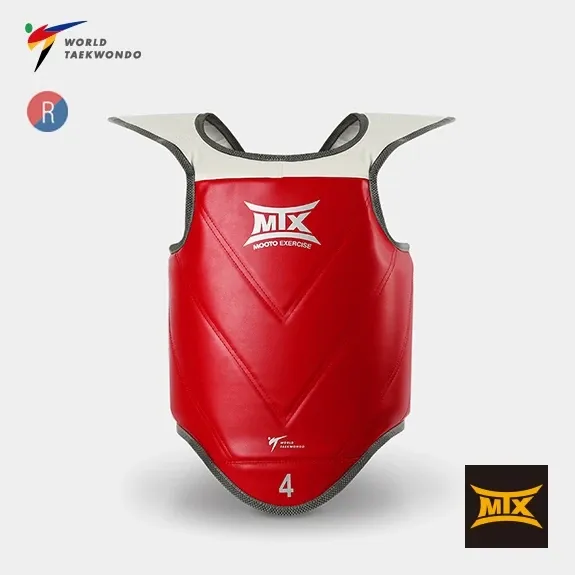
MTX 2 Reversible Chest Guard
'MTX’是为全球所有跆拳道运动员的初级训练及比赛提升而设计的产品线。不仅品质优良,价格合理,任何跆拳道选手均可无负担地佩戴使用。
KEY TAKEAWAYS
- →The unit of purchase is family x size x colour, not a single piece.
- →The EXTERA 2 family covers 10 items across hands, legs, head and groin under one naming prefix.
- →Headgear splits into a base form and two generations of face-covered forms, trading coverage against field of view.
- →A reversible chest guard covers two colours in one piece; colour-split headgear needs equal red and blue stock.
- →MTX 2 (training) and EXTERA 2 / EXTERA Pro Kyorugi (competition) run in parallel under shared segment names.