A student lifts the leg to shoulder height, the class applauds, and then the pad makes no sound at all. That gap is almost never flexibility. It is a broken power chain. The roundhouse and the front kick are the two base paths of taekwondo kicking: one throws power out through rotation, the other drives power straight. What they share is that force must travel from the floor through the support foot, the hip and the leg into the impact surface, and if any stage leaks, the end feels soft. This article splits both chains into three stages, explains where they diverge, sets up pad work and dojo grouping, and lists the three most common compensations with fixes.
First separate the two chains: rotation and straight line
The roundhouse sequences support-foot pivot, hip rotation, and a leg swing around the body's centreline, so at impact the torso has already turned. The front kick sequences knee lift, linear knee extension toward the target, and an ankle drive at the end, with the torso essentially unchanged. That difference sets the training priority: the roundhouse trains continuous rotation, the front kick trains straight-line transmission and height control. Taught together without distinction, students end up kicking a roundhouse the way they kick a front kick, lifting the leg instead of turning the hip. For the rotational path taken further, continue with the three-stage breakdown of the 540 roundhouse kick.
Under electronic scoring the split is even clearer: a roundhouse scores on the accuracy and force of contact at the moment of impact, while the front kick in competition is mostly a range-control and rhythm-breaking tool rather than a primary scoring kick. To understand how sensing surfaces relate to scoring, start with the breakdown of scoring zones; but whatever the rules say, the front kick is the foundation of every other kick and deserves its class time.
Roundhouse: the support-foot pivot switches the whole chain
The first leak in a roundhouse is the support foot. If it does not pivot, the hip cannot turn through, and the rest of the motion has to be forced up by the thigh; the leg looks high, but the power stops halfway. The correct action is to pivot on the ball of the support foot, heel lifting and rotating outward, until the knee and toes point at the target line. Only then is the hip driven rather than twisted. The test is simple: if the heel is still flat on the floor at impact, the power never crossed the line.
The second stage is the link between knee lift and hip rotation. Many students treat the knee lift as the finish line and only start rotating the hip afterwards, which cuts the force into two pieces. The workable order is that the knee begins rotating while it is still rising, the hip and the knee arrive together, and the leg swings through around the top of the arc. The usual compensation here is sitting the hips back: shifting weight backwards to make the hip turn, so at impact the torso has already left the pad. The fix is to press the weight onto the ball of the front foot while pivoting and keep the torso facing the target.
The third stage is the swing and the recovery. A roundhouse is not the leg being placed on the pad; the leg swings around the hip joint and after impact retracts quickly along the same path back beside the support leg. Slow recovery is the most reliable way to get countered, because after the strike the body is still standing on one leg with the hip open. Count the strike and the retraction on the same beat during drills so the recovery cannot be dropped, or have the student hold one beat after impact to confirm the support foot is still in place before landing.
Front kick: transmission along the line matters more than height
The first stage of a front kick is the knee lift. The knee rises toward the target, the lower leg folds, the ankle stays relaxed, and the height of the knee lift determines how long the kicking path will be. The common error is lifting the thigh instead of the knee: the knee opens to the side and the foot points outward, so the kick travels diagonally and the force scatters sideways. When a student says the front kick cannot reach the centre of the pad, it is usually the direction of the knee lift, not the length of the leg.
The second stage is hip drive with ankle extension. As the knee extends, the hip pushes forward and the instep or the ball of the foot delivers the strike at the end; if the hip stays put and only the lower leg snaps out, that is the classic lower-leg-only kick. The third stage is the recovery: the lower leg folds back along the same path to the knee-lift position before the foot lands, and the weight returns between both feet rather than dropping onto the front foot. If all three stages share one rhythm the kick looks like a single release; break the rhythm and it becomes lift, stop, kick, stop.
In dojo teaching the front kick is chronically undervalued. It is where a student first understands that force travels from the floor into the foot, and it is the shared base of the roundhouse, the axe kick and the back kick. If the base is not straight, every later kick carries the same leaking habit; conversely, once the front kick transmits cleanly, learning the roundhouse reduces to adding the turn.
Where the two chains differ
Placed side by side, the differences sit in three places. Support foot: the roundhouse must pivot, the front kick stays essentially fixed. Hip: the roundhouse rotates, the front kick drives forward. Recovery path: the roundhouse returns along the original arc, the front kick folds back to the knee-lift position. When those three match, students stop contaminating one kick with the other, and the coaching cues can be split too: turn for the roundhouse, push for the front kick.
It is also worth noting that height comes from different places. Roundhouse height comes from hip rotation and how far the support foot opens; front kick height comes from knee-lift height and the amount of hip drive. When a student cannot kick high, identify which kick is failing before deciding between flexibility work and turn correction, otherwise a month of stretching may change nothing. That is why we recommend keeping the correction language for the two kicks separate.
Using pad work to turn the chain into a reflex
Pad work is not there to build leg strength; it gives the power chain a defined endpoint. A roundhouse pad should sit at torso height, held slightly toward the holder's centreline, so the student has to rotate the hip to meet the surface squarely. Hold it outside the line and the student will sweep the leg instead of turning. A front kick pad sits between torso and chest height with the striking surface vertical to the floor, forcing the power into a straight line. Change the pad position and the student's mechanics change with it, which works better than repeated reminders.
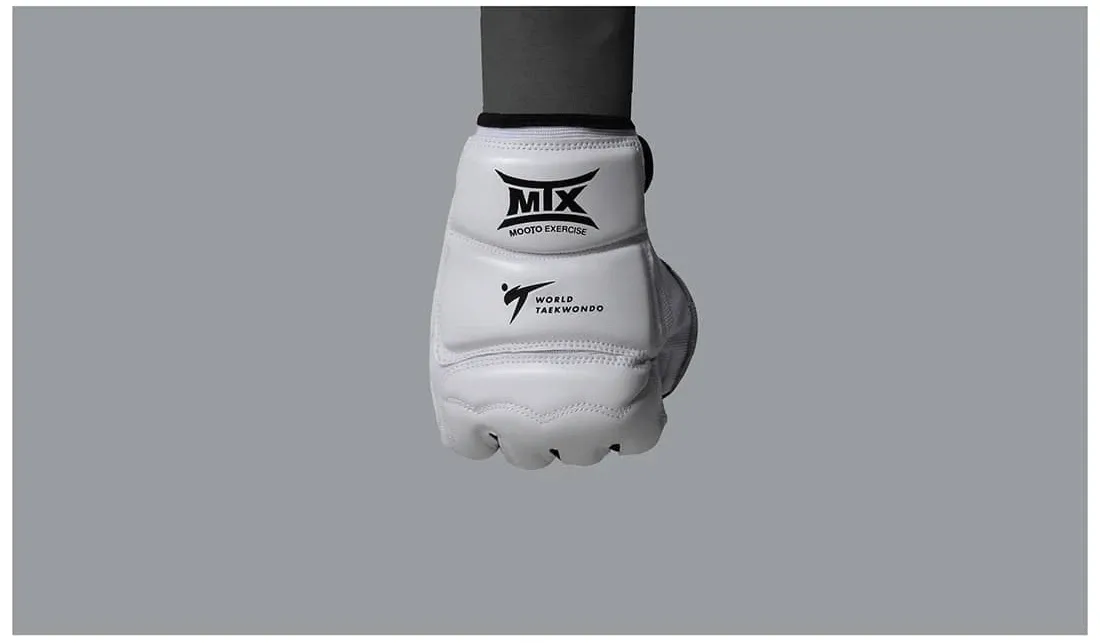
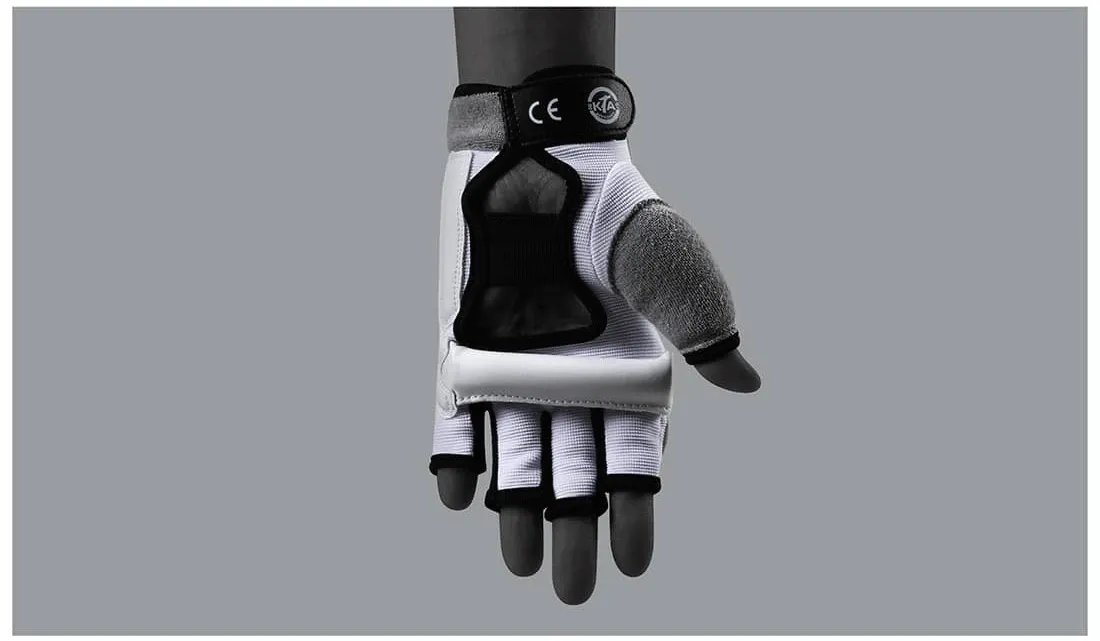
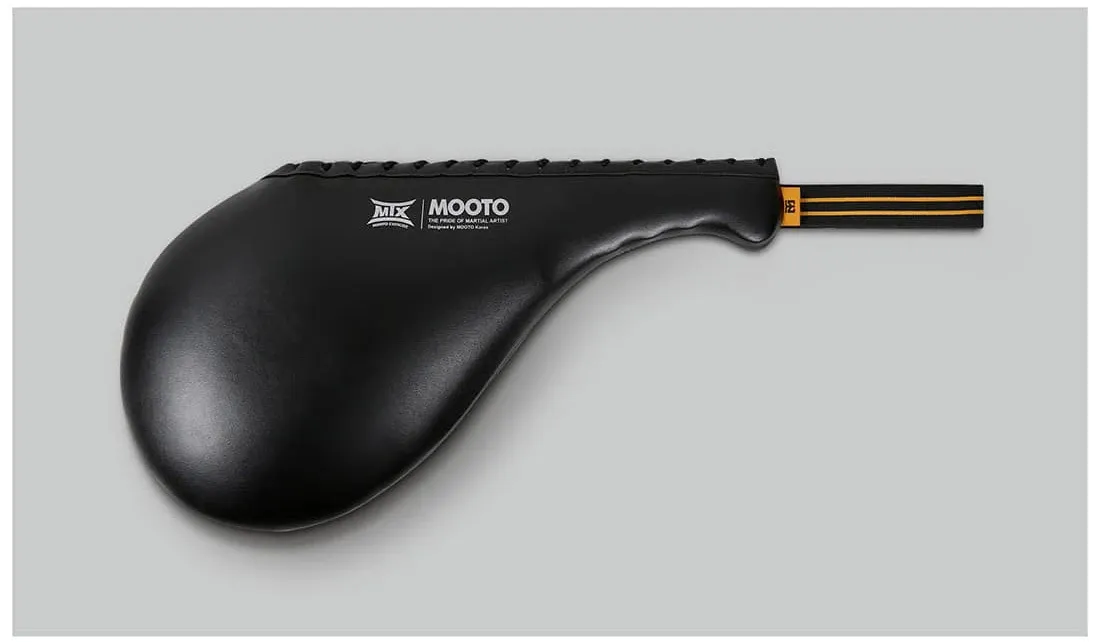
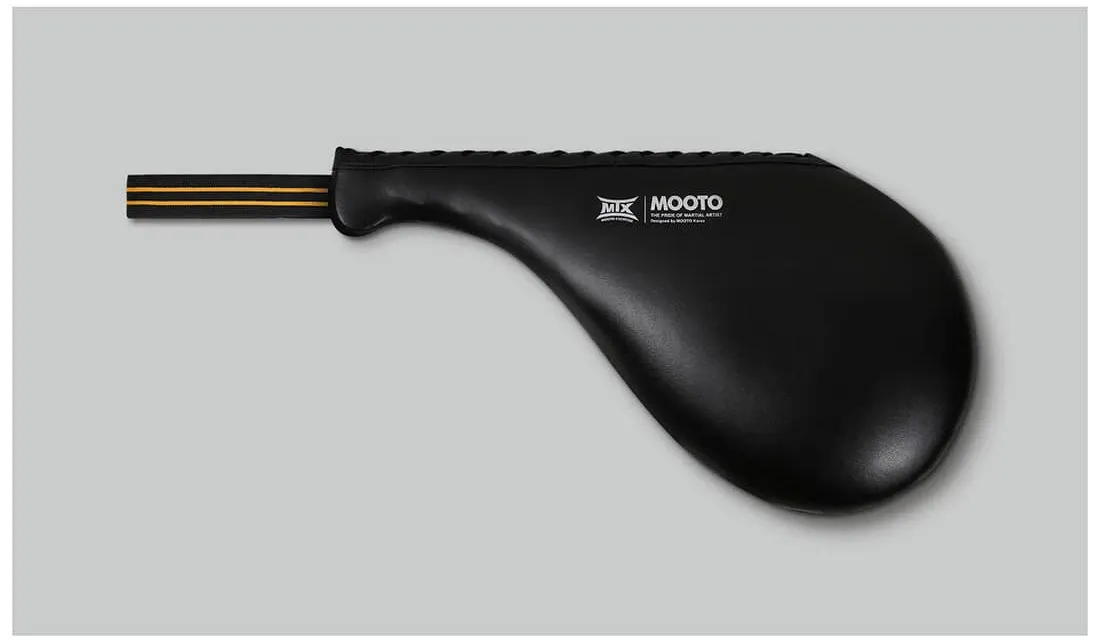
Holding the pad is the most overlooked teaching skill: the holder has to give steady resistance at the moment of impact while absorbing it, so the pad does not swing and the holder does not step back. MOOTO's on-site description of the MTX Target Mitt states it suits all striking and kicking drills; the single-face version serves solo landing calibration and the whip-like contact of a roundhouse, while the double-face version serves alternating-leg and continuous-kick rhythm work. When a dojo stocks pads by class, a workable estimate is one pad per two to three students plus spares of roughly ten percent of units in use; the exact configuration can be sent to the MOOTO team together with class structure and floor dimensions so it can be matched to real usage intensity, and the bulk purchasing process is covered in the dojo bulk purchasing guide.
The three most common compensations
One: a planted support foot with the lower back forced to twist. The signs are a flat heel, an inward knee, and soreness along the side of the waist after training rather than in the hip. The fix is unpadded pivot isolation: turn the support foot once and hold for a beat, confirm the knee and toes point at the target, then add the kick back only once the pivot is stable.
Two: arm swing manufacturing a sense of speed. A large arm swing makes the motion look powerful, but the hip has not turned and the force never crossed the line. The fix is slow roundhouses with both hands behind the back so the hip is the only engine, or with the hands held against the chest, which removes the space an arm swing needs.
Three: dropping the leg after impact. The leg falls straight down, the weight slams onto the front foot, and the recovery path disappears. The fix is to drill recovery as its own action, with one beat for the strike and one for the retraction, or to use a low pad for a three-beat strike, retract, hold drill. The same problem is common in the back kick, axe kick and side kick, and can be checked item by item against the breakdown of common errors in those kicks.
"A power chain does not mean more force. It means the path of the force is unbroken. When a student's pad makes no sound, it is rarely about strength; a stage in the middle is leaking."
A weekly plan and how to group a dojo class
Putting both chains into a week works in three layers: isolation, combination, sparring. Monday isolation, three sets of twenty pivots and knee lifts each, slow and without a pad. Wednesday combination, pad work alternating roundhouse and front kick, six sets of ten, split evenly between legs. Friday sparring, conditional rounds where only the assigned kick can score. On the conditioning side, hip-rotation stability and ankle control need dedicated work; see the explosive power and core sections of the taekwondo conditioning plan.
Group a dojo class by how much of the chain a student owns, not by belt. A typical class holds three types: intact chain with slow recovery; a chain that breaks at the hip; and still lifting the leg instead of turning the hip. The first group does pad work and conditional sparring, the second isolation plus slow pads, and the third returns to stationary knee lifts and pivots. Three students sharing one pad with the coach rotating every five minutes for corrections is far more efficient than whole-class cues.
KEY TAKEAWAYS
- →Roundhouse, three stages: support-foot pivot, knee lift linked with hip rotation, swing and retraction along the same arc.
- →Front kick, three stages: knee lift toward the target, hip drive with ankle extension, fold back along the same path.
- →Pad position dictates mechanics: slightly inside the centreline for roundhouse, vertical surface for front kick, outside the line means the rotation is done for the student.
- →Fix compensations in this order: planted support foot, arm swing replacing the hip, dropped leg after impact.
- →Group students by how much of the chain they own rather than by belt grade.
If your dojo is equipping kicking classes, or you need a full training-gear configuration by class type, floor space and usage intensity, send the student numbers, class structure and floor dimensions to the MOOTO team and we will return a configuration proposal with reference pricing. Product specifications are on the MTX Target Mitt product page, and further training method articles are collected under training technique.
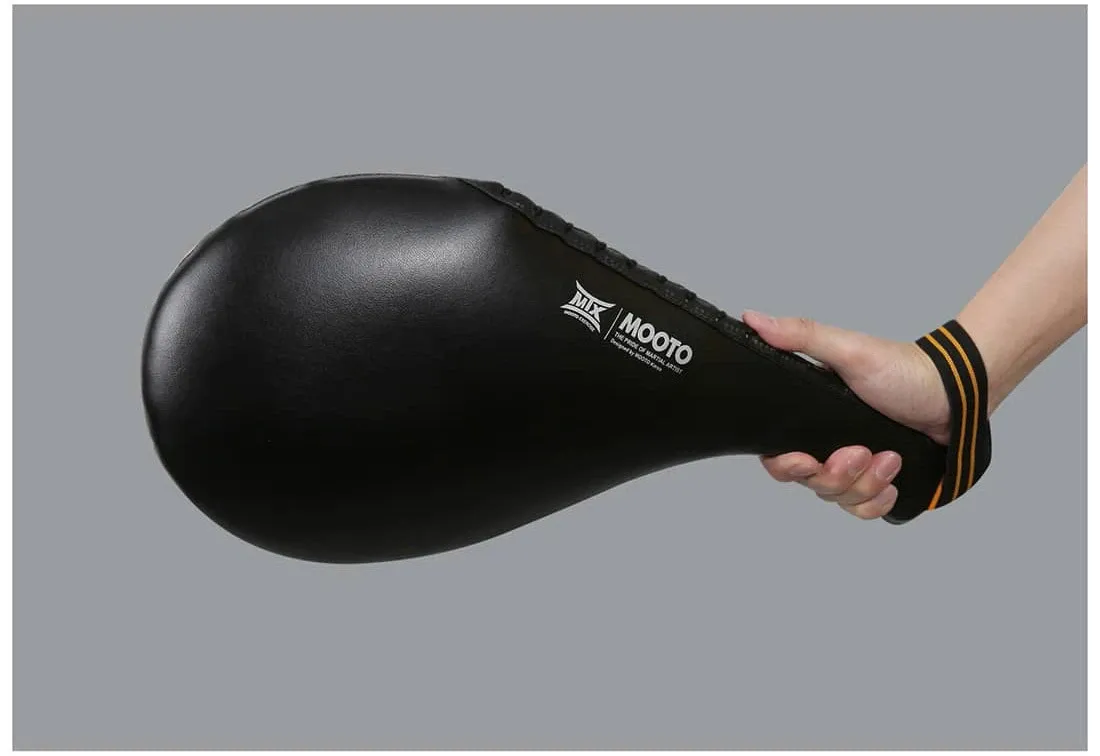
MTX Target Mitt Single/Double
适合各种打击和踢腿训练。
FAQ
Q1.My roundhouse height is poor. Should I stretch first or fix the motion?+
Diagnose the bottleneck first. Roundhouse height comes from hip rotation and how far the support foot opens; if the foot does not pivot and the hip stays square, no amount of height will help. Fix the pivot and the turn, and only then look at flexibility.
Q2.Is the front kick still useful in sparring?+
Yes. In competition it mostly controls range and breaks rhythm, and it is frequently used to disrupt an opponent's attacking cadence. It is also the foundation of the roundhouse, axe kick and back kick, so a weak base carries over.
Q3.How often should pad work be scheduled?+
Two to three times a week with no more than two kicks per session works well. Run isolation before pad work so the pivot and knee lift are confirmed, and leave time for recovery drills before sparring.
Once the chain runs clean, the leg does not necessarily get higher, but the sound of the impact gets solid first; for a dojo that retains students better than a short-term push toward advanced kicks. Build both base chains properly and the advanced movements have somewhere to land.