In the Final Week, Doing Less Is Often More Stable
With one week left before a competition, the instinct for many coaches is to add work - another full run of the poomsae, another set of sparring rounds, anything to feel prepared. What actually decides your condition on the day is rarely how much you trained this week. It is whether fatigue has cleared, whether technique has stayed stable, and whether the pre-event checks are complete.
Take the World Taekwondo Poomsae Championships, running 16-20 September at the Air Dome in Songam Sports Town, Chuncheon, Korea. Athletes arrive having already moved into a taper week. This article splits that final week into three jobs: how to cut the training, what the Poomsae score sheet is actually looking at, and which gear checks must be finished in advance. For the schedule and storylines, start with the Chuncheon preview.
In one sentence: the final week cuts training volume, not training intensity - total sets come down clearly, but every movement is still performed at competition speed, rhythm and kihap.
How to Taper Before a Competition: Cut Volume, Keep Intensity, Keep Rhythm
The logic of tapering is simple. Fatigue from training needs time to clear, while the motor memory you have built will not disappear because you trained less for a few days. If the week before a competition keeps the same high volume and high intensity, athletes arrive on the mat stuck in the middle - fatigue not yet gone, peak not yet reached. That is why the usual pattern is to bring total work down while keeping intensity close to competition level.
Three practical rules help. First, reduce the number of repetitions, but keep every run-through complete rather than breaking the form into fragmented drills. Second, place the most demanding work in the early part of the week and shift toward rhythm, kihap and breathing detail as the competition approaches. Third, keep one light session every day - stopping completely tends to leave the body heavy. Slow movements are the most commonly neglected part of poomsae: the WT Poomsae handbooks recommend a duration of five to eight seconds for slow techniques, noting that finishing in under four or over nine seconds can hurt the score. The final week is the right time to calibrate that timing.
What the Poomsae Score Sheet Is Looking At
The poomsae scoring standard is not complicated at its core, but the detail is dense. Under the WT Poomsae handbooks, Recognized Poomsae uses a ten-point scale: Accuracy carries 4.0 points and Presentation carries 6.0. Judges begin accuracy at 4.0 and deduct from there - 0.1 for a minor mistake and 0.3 for a major one.
The handbooks define major mistakes precisely: performing an incorrect, omitted or additional technique; a significant loss of balance; a pause longer than three seconds; a kihap delivered at the wrong moment; or looking in a direction that does not match the movement. Using an open hand to support the pelvis in order to gain kick height also counts as a major mistake. The same documents instruct judges that they must be completely certain an error occurred before applying a 0.3 deduction, and that several deficiencies inside one technique should not automatically stack. For athletes, the practical takeaway is that the final week should be spent eliminating major mistakes rather than adding ornament.

The 6 Presentation Points: Power, Rhythm, Expression
The six presentation points break into three areas worth two points each: Speed and Power, Rhythm and Tempo, and Expression of Energy. The handbook is direct about power - it should be generated through the whole body, particularly the core, rather than relying exclusively on the arms or legs. A high-quality technique starts from relaxation, accelerates, and reaches maximum speed and power at the point of impact.
Rhythm does not mean holding one speed throughout. The form should convey a realistic combat situation: each technique finished, movements connected, without sacrificing balance or intent. Expression of Energy covers concentration, confidence, eyesight, kihap, attitude, breathing control, and the relationship between each movement and its offensive or defensive purpose. In other words, a technically tidy form that shows no martial intent can still lose a substantial share of those six points.
Freestyle's Hard Limits: Order, Stances, Zero Scores
Freestyle Poomsae is scored differently: six points for Technical Skills and four for Presentation. The technical score contains five mandatory skills that must appear in sequence - Jumping Side Kick, Multiple Kicks in a Jump, Jumping Turning Kick, Kyorugi-Style Consecutive Kicks and Acrobatic Kicking Technique - followed by Basic Movements and Practicability.
Why does order matter so much? The handbook states that a skill performed too early may only be assessed inside the presentation score and receive zero in its technical category. A difficult, well-executed rotation placed in the wrong slot simply forfeits its technical points. Three mandatory stances are equally strict: Hakdari-seogi, Beom-seogi and Dwit-gubi must each be clearly recognizable and held for at least one second. Missing any of them costs 0.3 from the technical subtotal, and in Pair and Mixed Team events every member must perform them simultaneously, with failures to synchronize also deductible per occurrence.
Individual skills also carry zero-score conditions. The Jumping Side Kick requires at least 80 percent knee extension in the kicking leg and a height above belt level. Multiple Kicks in a Jump requires at least three valid kicks within a single jump, each reaching the required height with sufficient knee extension. The Jumping Turning Kick requires a minimum rotation of 540 degrees, and if the supporting foot lands before the kick is completed the entire skill scores zero. Kyorugi-Style Consecutive Kicks must contain seven to ten techniques, preceded by three to five bounces in place; too few or too many bounces, fewer than seven valid kicks, or turning the body more than 90 degrees can zero the whole section. A routine may also include a maximum of three acrobatic sequences - each extra sequence costs 0.3, and an acrobatic sequence without a kick costs another 0.3 - and the Acrobatic Kicking Technique must finish with a recognizable Taekwondo kick.
The value of these clauses in the final week is not to redesign your routine at the last minute. It is to confirm the routine you already have is not crossing a line. Bounce count, rotation angle, stance duration and the number of acrobatic sequences can all be self-checked in a single run-through. Found this week, there is still time to adjust; found after the call to the mat, the risk travels with you.
Mat-Side Gear Checks: Dobok, Belt and Tape
Equipment inspection is not a five-minute job before the first call. Under the WT Poomsae handbooks, inspection covers identity, attire and safety, and several items need advance preparation: medical tape or soft braces require prior approval from the Organizing Committee's medical personnel; visible taping between ankle and knee or between wrist and elbow must match skin tone and cannot exceed two layers; a hijab may not be secured with metal pins or contain metallic objects. Nails, hair accessories, piercings, belt length, undershirts and uniform alterations all carry their own rules. In Freestyle Poomsae, ordinary eyeglasses are not permitted - contact lenses or sports goggles only.
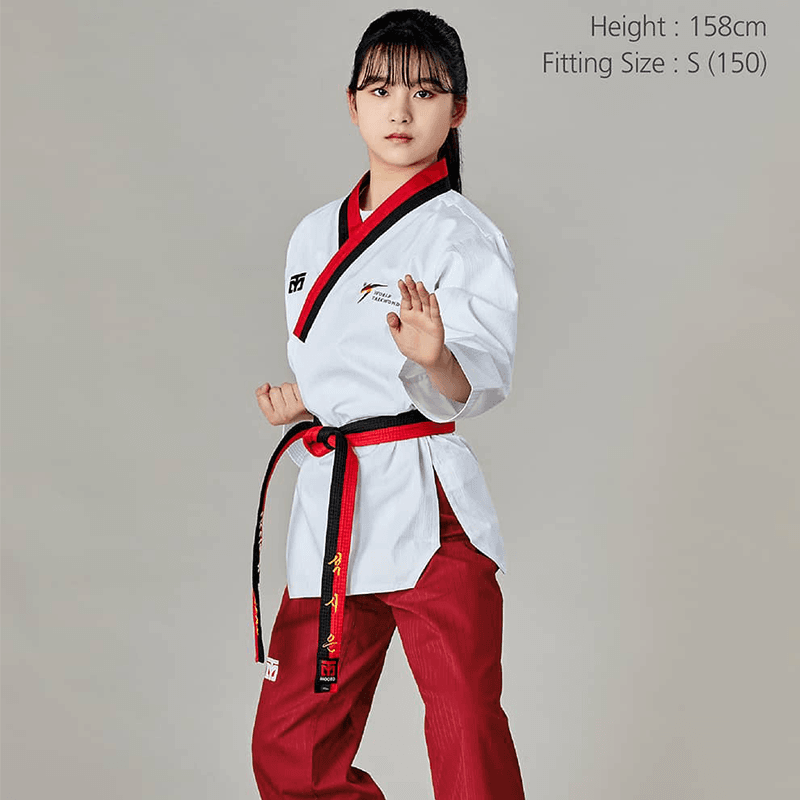
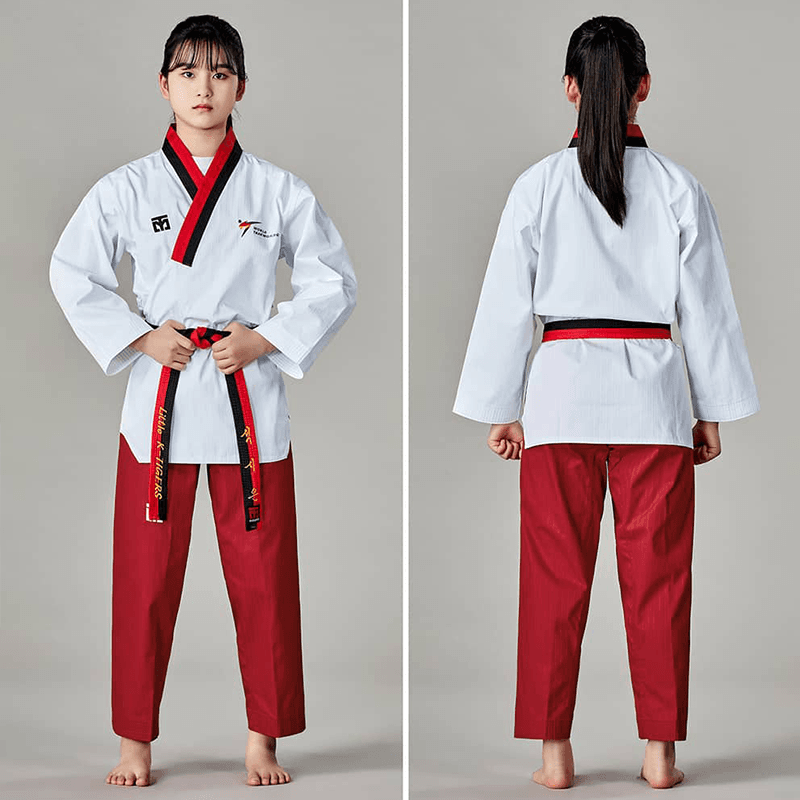
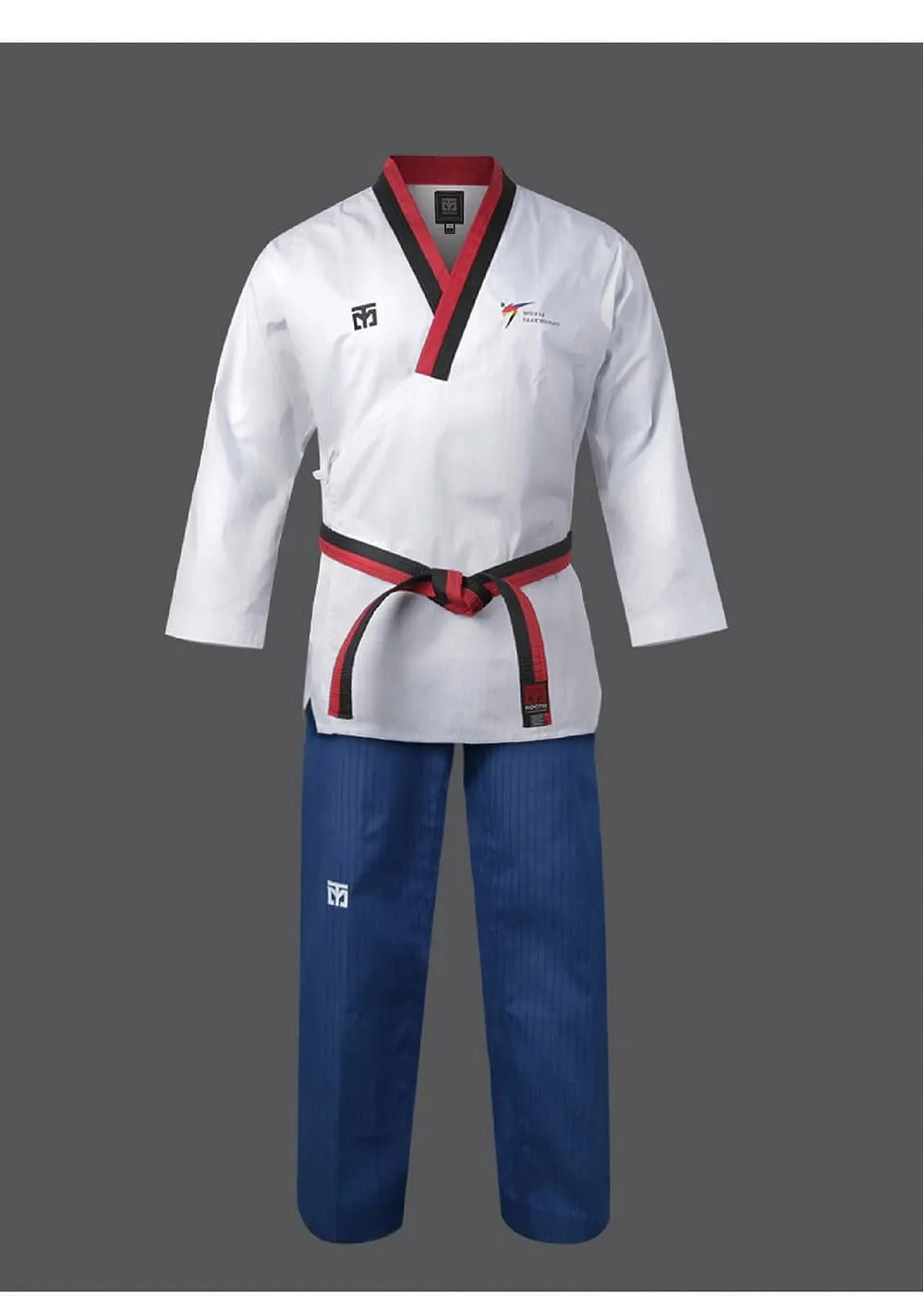
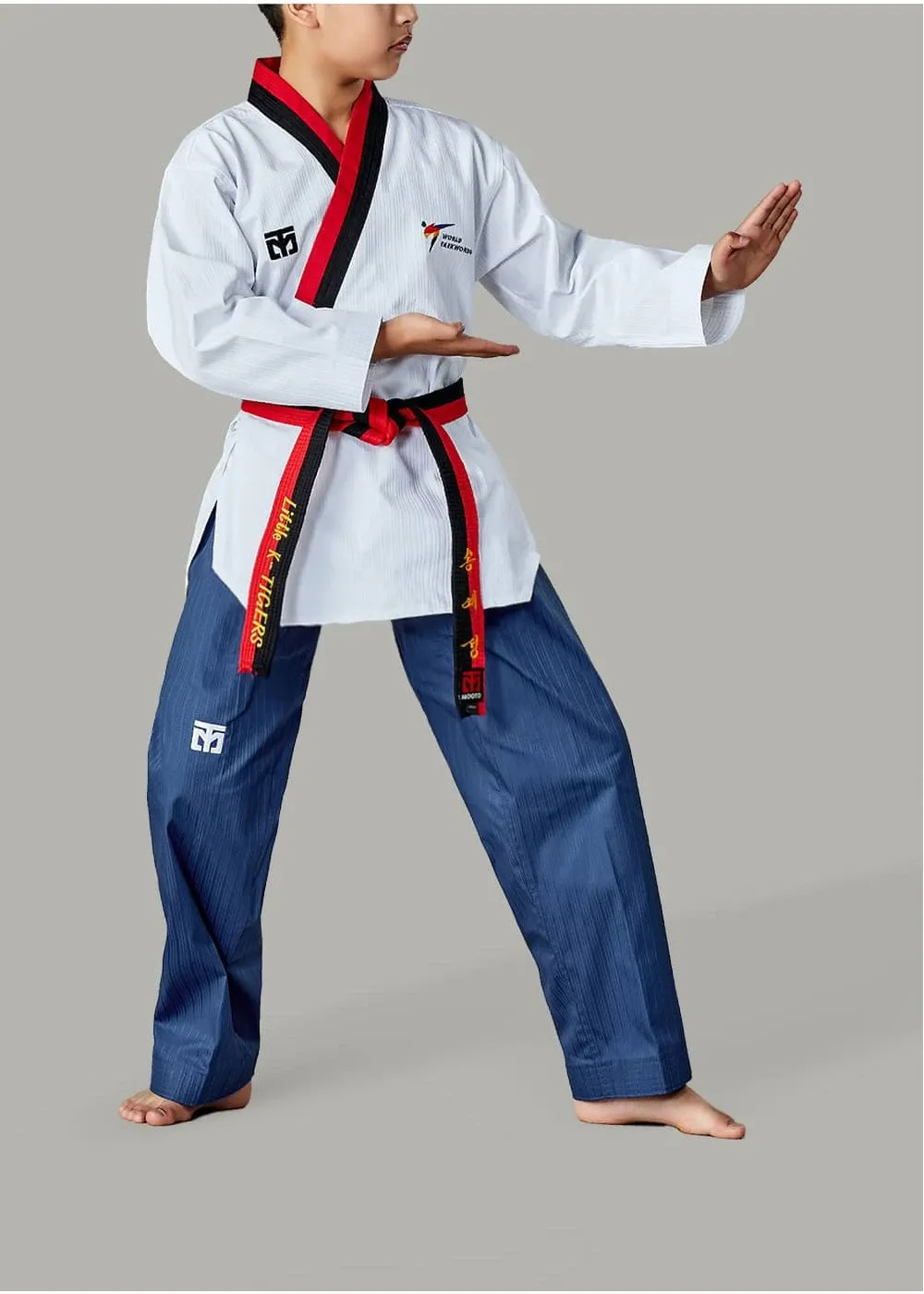
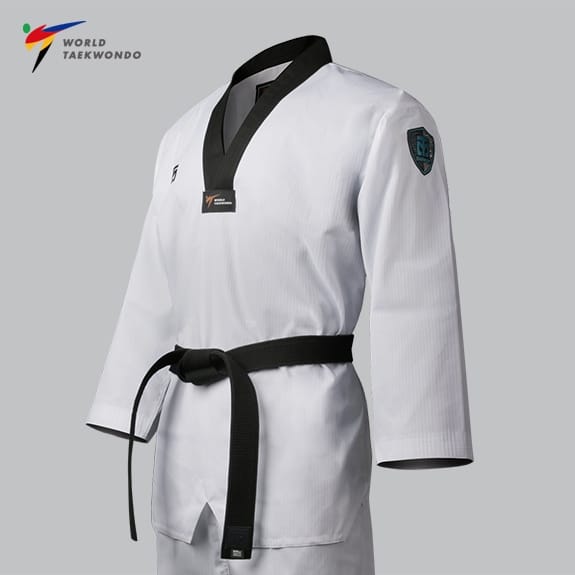
That is why the dobok, belt and protector bag deserve a full pass a week out: any unapproved alteration, the length of the belt, and whether protective gear and tape are complete. MOOTO's Taebek 2 Poomsae uniform and belts map directly onto those checklist items. Athletes competing in kyorugi should additionally confirm that their uniform is the certified item for the relevant level.

journal.faq
Q1.Can athletes stop training entirely in the final week?+
Full rest is usually not recommended. Stopping completely leaves the body heavy and the movement rhythm rusty. The more common approach is to cut training volume sharply while keeping one light session a day, and to spend the remaining energy on rhythm, kihap and breathing detail.
Q2.How are accuracy deductions calculated in Recognized Poomsae?+
Under the WT Poomsae handbooks, accuracy starts at 4.0: a minor mistake deducts 0.1 and a major mistake deducts 0.3. The same documents require judges to be completely certain before applying a 0.3 deduction, and state that several flaws inside one technique should not automatically stack.
Q3.Is there a cap on acrobatic content in Freestyle?+
Yes. A routine may include a maximum of three acrobatic sequences, with 0.3 deducted for each additional sequence; an acrobatic sequence without a kick also costs 0.3. The five mandatory skills must additionally appear in the prescribed order, and a misplaced skill can score zero in its technical category.
Q4.Who confirms gear specifications for a competing team?+
The organizing committee and the official WT technical documents are the reference, and the handbooks themselves state that the official competition rules prevail in case of conflict. For bulk gear, send the model, size distribution and quantity through the on-site enquiry form and we will reply with pricing, lead time and logistics options.
Practical Notes for Coaches and Dojangs
Treat the final week as a closing move: cut volume and raise quality in training; walk through the deduction list, especially the items most likely to be hit; and finish equipment inspection a week early so there is time to replace or repair. For dojangs sending a team, register every athlete's dobok, belt, protectors and tape on a single list, confirm item by item, then pack together - it is far cheaper than discovering the problem at the venue.
If your dojang is equipping a team for a competition or a new term with Poomsae uniforms, belts and protectors, send the models, size distribution and quantity through the on-site enquiry form and we will reply with bulk pricing, lead time and logistics options. You can also browse the Training & Technique category for other technical breakdowns.
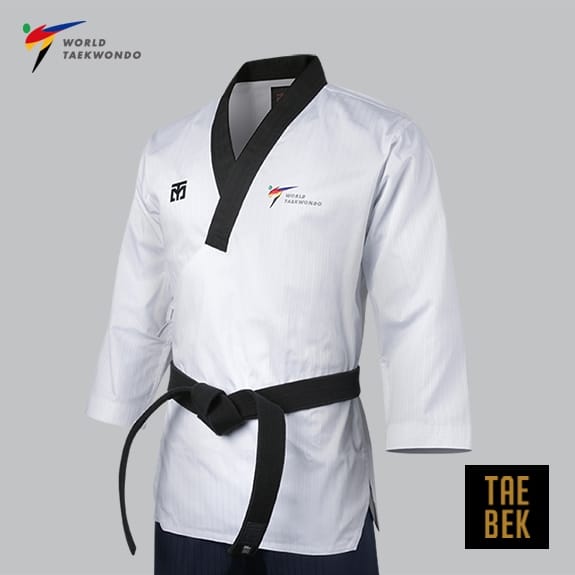
Taebek 2 Poomsae Uniform Dan Male
韩国原装太白品势服 WT认证款
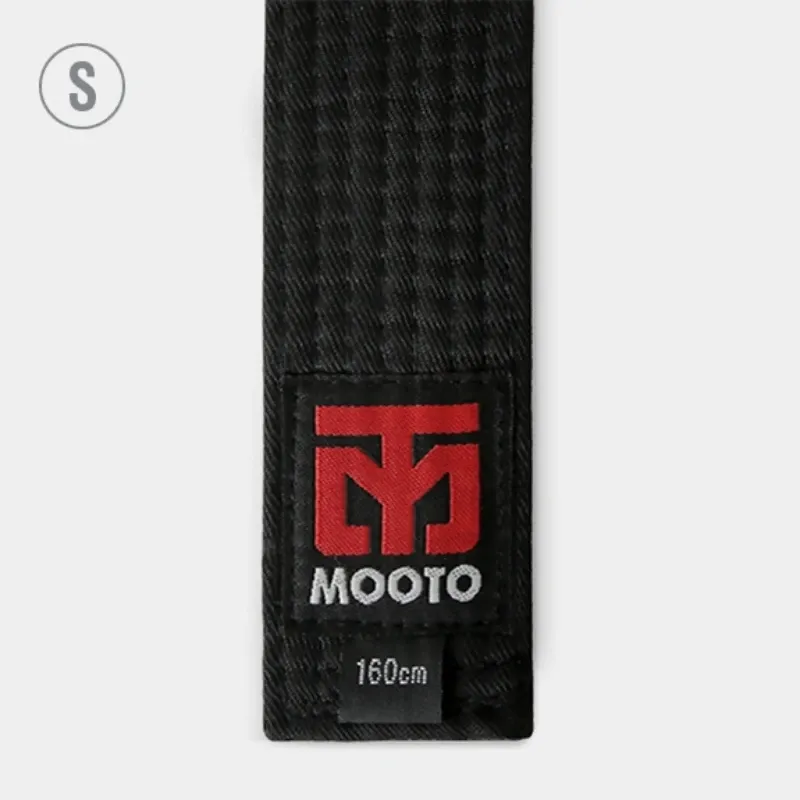
Black Belt Single 4cm
请输入产品描述...
journal.takeaways
- →The final week cuts training volume, not intensity: fewer sets, but every movement still performed at competition speed, rhythm and kihap
- →Recognized Poomsae is scored out of ten: Accuracy 4.0 plus Presentation 6.0, with 0.1 for a minor and 0.3 for a major mistake, and no automatic stacking inside a single technique
- →The five mandatory Freestyle skills must appear in order and all three mandatory stances must be clearly held for at least one second, or 0.3 is deducted
- →Individual skills can be zeroed: rotation under 540 degrees, fewer than seven consecutive kicks, or an out-of-range bounce count can wipe out an entire section
- →Finish gear inspection a week early: tape must match skin tone within two layers, and ordinary glasses are not permitted in Freestyle