When the temperature drops, the question in most dojangs is no longer what to train but what to wear. Adding thickness is easy; keeping warmth without restricting kick range is the hard part. This winter training gear checklist splits equipment into three layers - base, mid and outer - explains what each one does, and sets out how dojos should plan a bulk order.
1. The point is layering, not thickening
Taekwondo is a sport built on large leg movements. A thick garment compresses hip and shoulder range: the inside of the thigh gets blocked during a roundhouse, and torso rotation slows down. The first principle of winter gear is therefore adjustable layering - several thin layers instead of one thick one, so you can remove a layer when hot and add one when cold.
There is a practical benefit too. Training intensity varies enormously inside a single session: the warm-up needs insulation, sparring needs heat release, and the wait at the side of the mat after training needs rapid re-warming. One heavy jacket cannot cover all three phases. Three layers can.

2. Three layers: base, mid and outer
Base layer: wicking decides how it feels
The base layer touches the skin, so it determines wicking rather than warmth. Summer dobok are designed around sweat absorption, breathability and quick drying. Winter judgement is different: during a mid-session break, saturated fabric pulls heat away from the body fast, and that is the main cause of getting cold in winter.
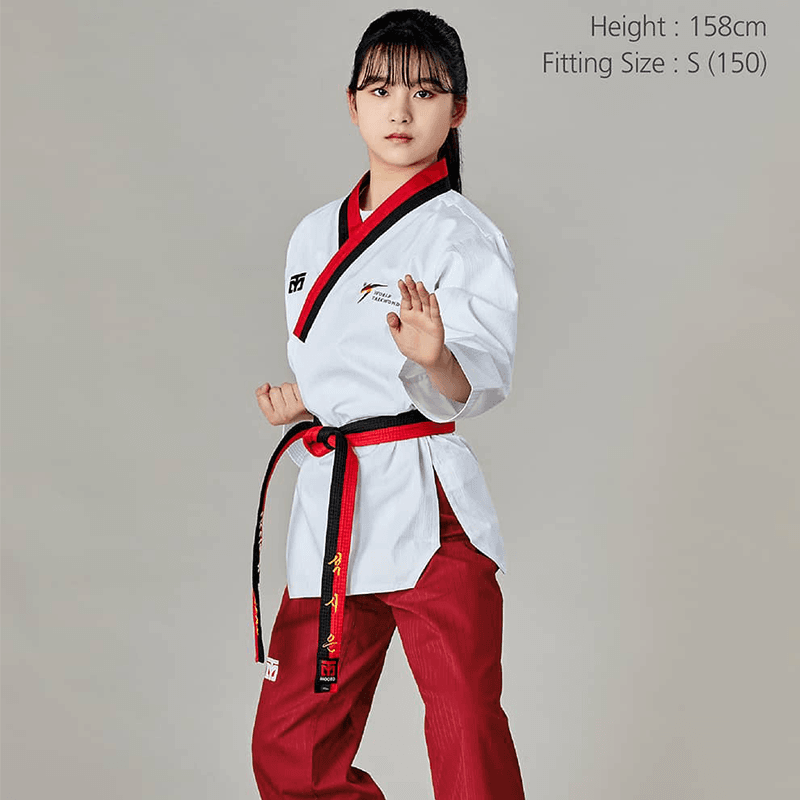
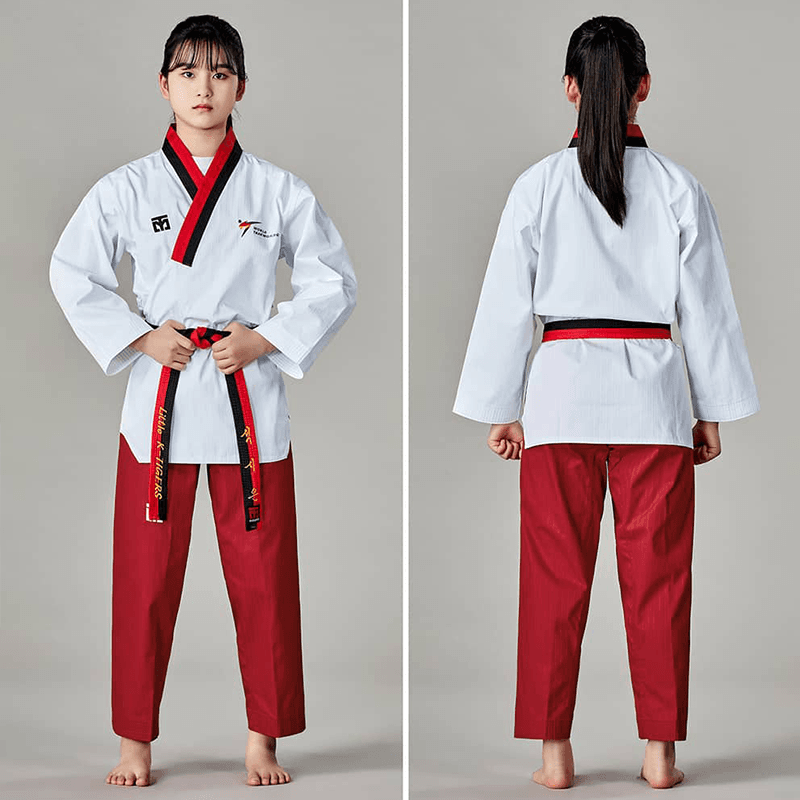
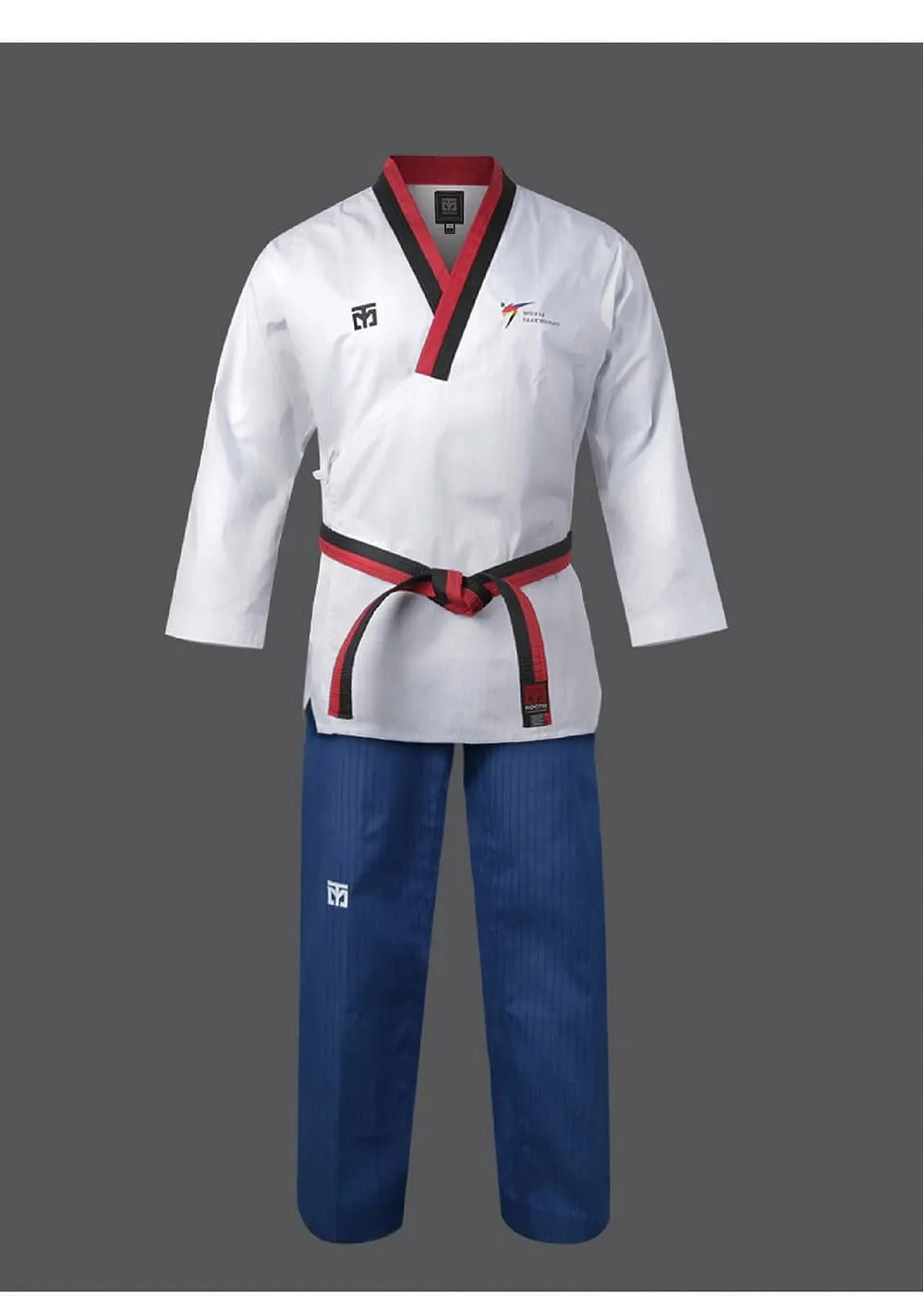
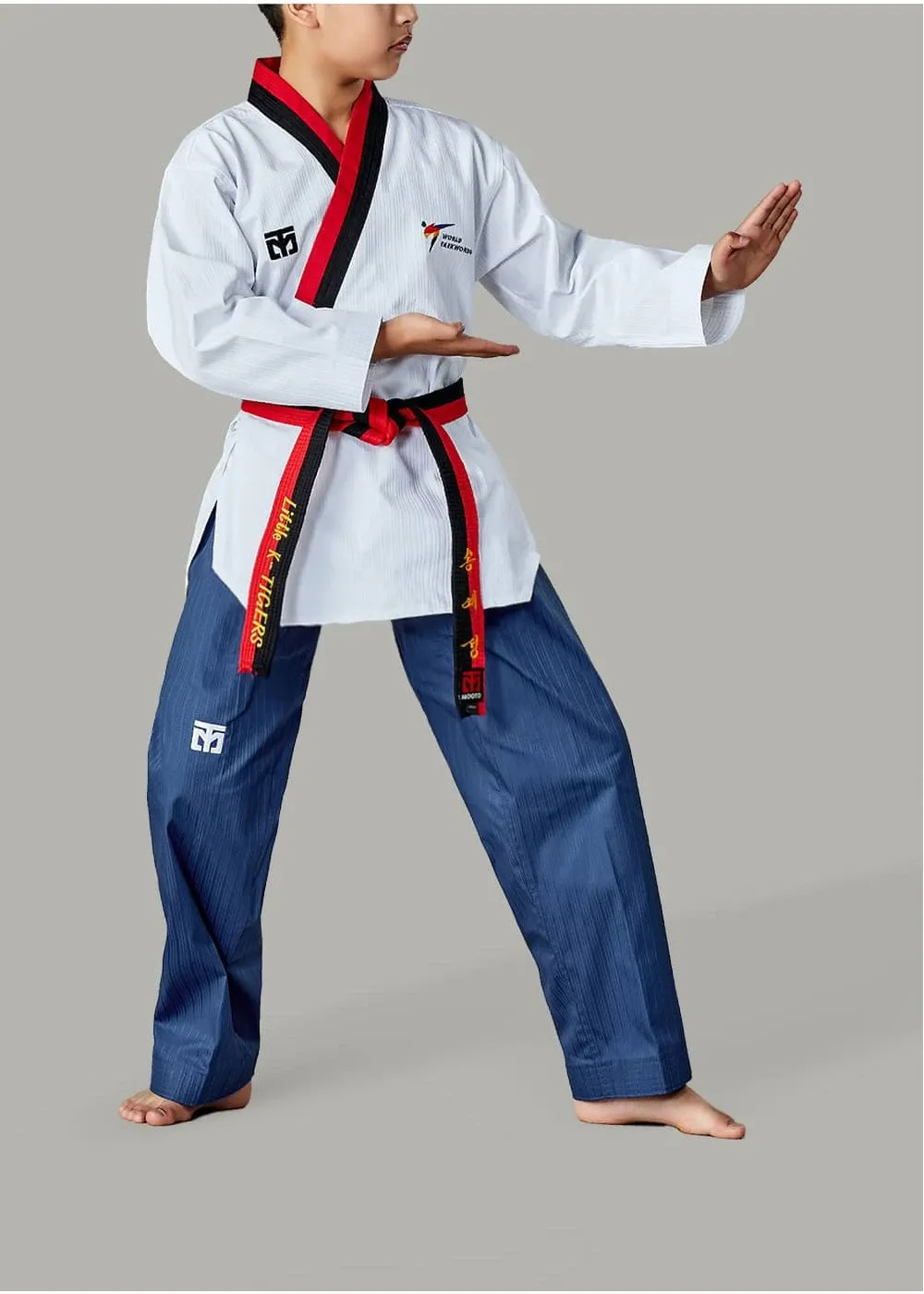
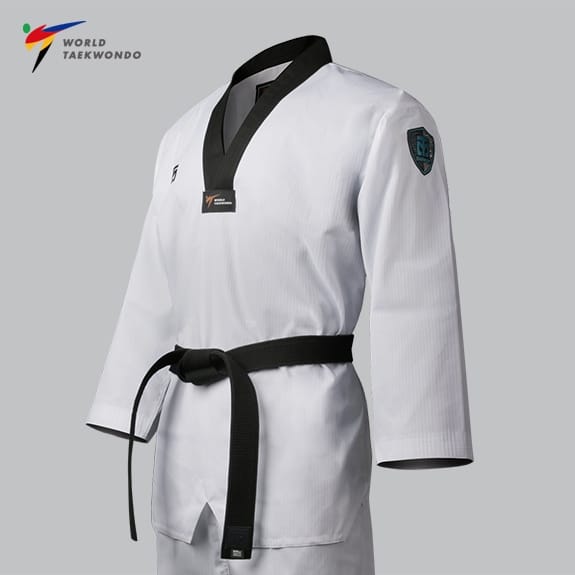
In practice, keep the standard dobok and switch the base layer worn between drills to a quick-dry fabric, then add a mid layer on top. The key to layering over a dobok is not thickness but how quickly the inner layer moves sweat away. Where the dojang hall is genuinely cold, a heavier standard-weight dobok is the better choice, while a summer-weight dobok works well as a spare or rotation set. For height-to-size mapping, see our dobok size guide at /journal/99fcda36-3d62-4027-9ed7-c78df6191a48.
Mid layer: choosing between a vest and padding
The mid layer decides whether you are warm, but the difference between a vest and a padded coat is not thickness - it is whether the arms are covered. A vest keeps the arms free and is suitable to wear during training; mid-length padding covers torso and thighs and suits the side of the mat before and after sessions, as well as coaches standing for long periods in a cold hall.
The MOOTO HERO Padding Vest, for example, covers sizes 140 to 200 in white, black and navy, and is a common choice for a unified dojo team kit. The EUROPA Padding s2 mid-length coat runs from S(150) to 3XL(200), also in white, navy and black, with a longer cut for outdoor travel and the edge of the hall. The logic behind this mid-layer pairing is that one cohort of students needs only two items to cover both in-training and out-of-training situations.

Outer layer: wind is the real variable
In winter, perceived temperature is often decided by wind. A draught inside the hall or a cold wind on the way to training makes being dressed warmly yet still feeling cold the normal state of affairs. The outer layer is not there to add bulk; it is there to block wind.
The MOOTO Thunder Jacket is positioned as a windproof jacket that works as everyday wear, covering S(150) to 3XL(200-210) in black, grey, blue, red and yellow. The Taepoong Jacket s2 runs from 120 (3XS) up to 210 (4XL), covering the full size band from youth classes to adult classes. Size the outer layer one step up so that a mid layer underneath never restricts kicks or rotation.
3. Three practical points for winter training
First, extend the warm-up. In low temperatures muscle viscosity rises, and the same warm-up routine needs longer to achieve the same joint range. Add roughly a third more warm-up time in winter and give the ankle, hip and shoulder joints their own dynamic work.
Second, stay active between sets. Complete rest during intervals lets core temperature fall, so small footwork movements help maintain warmth and stop muscles entering the next high-intensity set cold. Third, keep hydration the same: thirst drops in winter, but sweat loss does not fall much, so the same drinking frequency and spacing used in summer should be maintained.
Flexibility work matters even more in winter. Forcing a stretch in the cold is a common cause of injury; follow a staged method and only move into static stretching after a proper warm-up. Our guide to safe front and side splits training at /journal/cad874a3-50e1-4a4e-abfc-63ae05d89649 sets out the full staging and the usual mistakes.
Bottom line: the right winter kit is three adjustable layers, not one heavy layer.
4. Dojo winter purchasing checklist
For dojos and dealers, winter purchasing follows different logic from individual buying: it needs a ratio based on class numbers, height distribution and rotation cycles. An executable starting point is one mid layer per athlete, plus 2-3 shared outer shells for trial students, temporary loans and coaches on the floor. For sizing, count students per height band first and then set quantities by proportion - usually safer against dead stock than ordering by total volume.
Jackets and outerwear have long replacement cycles: bought once, they serve as fixed assets across several winters, while base layers and dobok need topping up as student numbers grow. Our dojo bulk purchasing guide at /journal/36d1ce57-36fb-49ef-94a9-98213e167617 covers the full staged process, including the demand list, specification alignment and inquiry essentials.
KEY TAKEAWAYS
- →Replace one thick layer with three: base for wicking, mid for insulation, outer for wind - adjustable at every phase.
- →Split the job between vest and padding: a vest for training, mid-length padding for the mat side and outdoor travel.
- →Size the outer layer one step up so a mid layer never limits kicks or rotation.
- →Plan one mid layer per athlete plus 2-3 shared outers, and set size quantities by height distribution.
"Winter gear problems are rarely about thickness. They are about structure - whether you can adjust quickly across warm-up, sparring and rest."
FAQ
Q1.Do I need a heavier dobok for winter training?+
Not necessarily. A dobok is built around freedom of movement, and a heavier one compresses hip and shoulder range. The more common approach is to keep a standard dobok, add a quick-dry base layer between drills, and add a mid layer and outer shell before and after training.
Q2.Should I choose a vest or mid-length padding?+
They split the job. A vest keeps the arms free and suits training; mid-length padding covers torso and thighs and suits waiting at the mat side and travelling outdoors. For a dojo, having both and switching by scenario works best.
Q3.How do I set quantities for a first winter order?+
Count students per height band first, set size proportions from that, and reserve 2-3 shared outer shells. Configure mid layers per person and outers for venue-shared and rotation use to reduce dead-stock risk.
To configure a winter training kit for a dojo or dealer channel, share your student numbers and height distribution and the MOOTO team will provide size ratios and an inquiry plan.
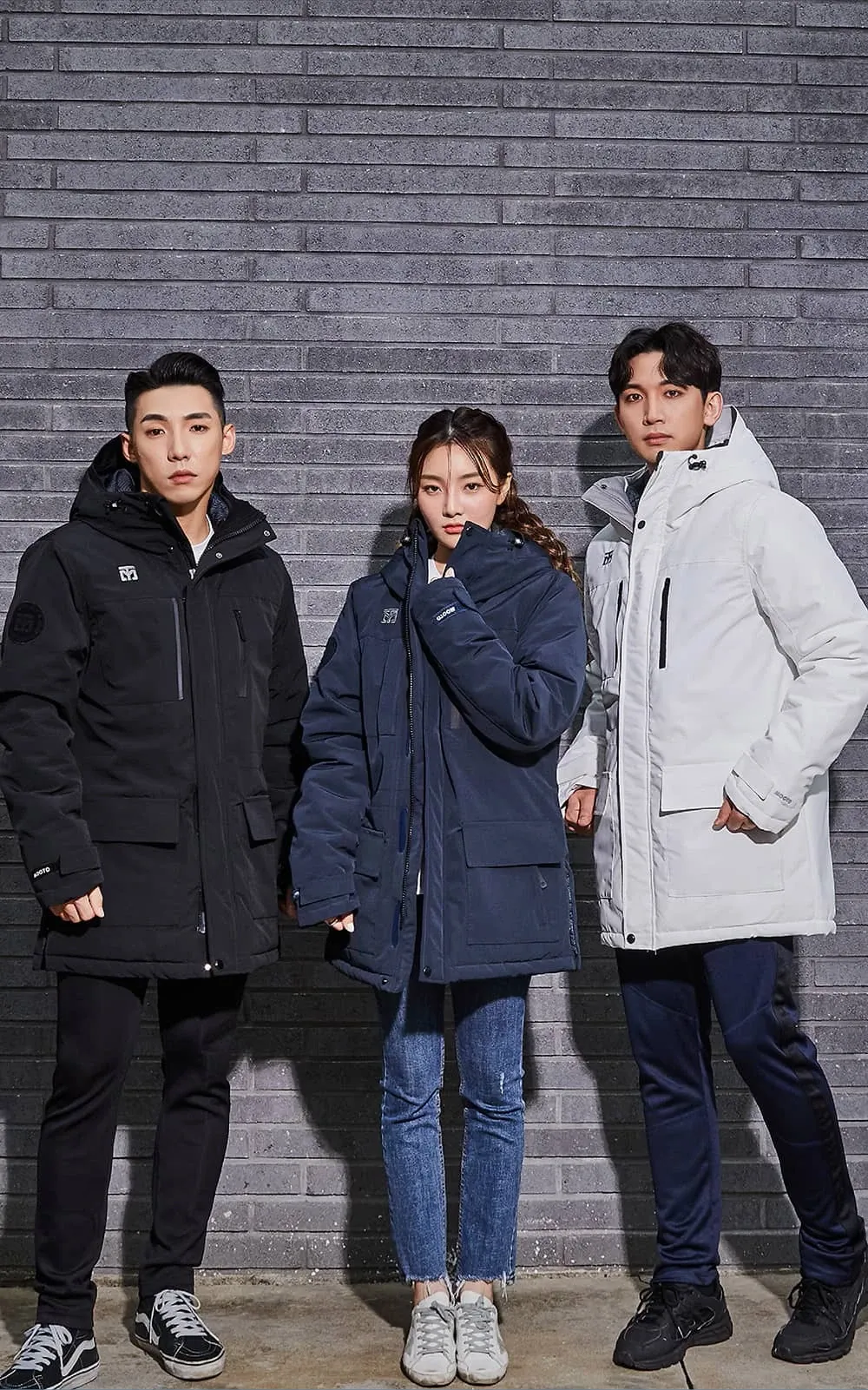
EUROPA Padding s2
采用卓越保温性能的填充材料